
1. Research and structure
Who comes to the site, what are they looking for and which step do they need to take? That determines the structure: pages, levels and what can go. Wireframes come before colour.


Web design
A website with a character of its own, helping visitors take the next step. With fifteen years of experience in UX and development, we design and build around your content and visual identity. We tailor the structure, imagery and interactions to your organisation. Accessible across screen sizes and manageable by your own editorial team.
If you only need a fresh look for a site that otherwise works well, a redesign on the same foundation is usually enough. We will tell you that too.

How we design your website
Zenjoy is a web design agency and digital product studio in Leuven. For us, web design covers research, structure, design and handover. We design around your real content and visual identity, test with the people who will use the site, and build in Nimbu, our own CMS, so your editorial team can maintain the design without breaking it.


For a landing page, an early test or a sole trader, what an AI website builder draws may be enough. It becomes limiting once the site has to express your organisation and last for years. These are four things we often hear:
AI designs draw from the same patterns. The site looks polished but says nothing about who you are. A visual identity is more than a logo in the corner.
A template expects three short sentences and a stock photo. Your content is longer, in three languages and changing. A design based on real content can handle that.
Beautiful and usable are different things. The step a visitor needs to take is the first design decision; the call to action follows from it.
The people who work in it every day choose another colour, a longer heading or an extra block. A design that does not account for that wears out within a year.
Good web design is a set of agreements that keeps a site coherent under your own editorial team, long after launch.
Four steps, in this order. The order matters.
Who comes to the site, what are they looking for and which step do they need to take? That determines the structure: pages, levels and what can go. Wireframes come before colour.
We design with your text, images and visual identity, in the languages you need. Typography, colour and rhythm follow the brand; calls to action follow the step you want visitors to take.
Keyboard, screen reader, slow connection, small screen. WCAG 2.1 AA is our starting point, with contrast we measure rather than guess.
The design lives in Nimbu as blocks with boundaries: your editorial team can write, rearrange and publish without breaking the design. It includes a review step and version history.
Web design and web development sit in one team of designers and developers. Designers know what the CMS can do; developers know why a block is designed the way it is. At handover, your editorial team gets a short training session and the design rules in writing. Nothing gets lost between design and launch, and the site remains recognisable after updates.
Need a complete website, with content, languages and integrations? → Website development
Do you sell online? An online shop follows its own process. → Online shops
A website is not a poster. Graphic design makes something beautiful in one format; web design makes it usable on every screen for visitors who came to do something. We start with three questions: what is your brand story, what should a visitor do here, and who will maintain it?
Your visual identity exists on paper and in your logo. Online, it needs a second life: typography that remains legible on a phone, colours with enough contrast, and an image style that still works when the editorial team chooses photos themselves. We record those rules so the site still conveys the same brand in two years.
Conversion is the step you want a visitor to take: request a conversation, become a member or find a document. Each page type gets one clear next step and a call to action that leads to it. Potential customers should not have to search.
Usable websites start with the route, not the colour. We first draw the flows in wireframes and test them with real users from your target group. Graphic design comes afterwards.
A design without real text is a promise. We design with your content, and where copy is still missing, we help write it or work with a copywriter who knows your voice.
The result is custom work for an SME or organisation that needs a professional website, not a second version of a template: websites that work for visitors and search engines because structure and content are designed together.
Who visits, what are they looking for and which step do you want them to take?
Sitemap and wireframes before a single colour is chosen.
Around your real content and visual identity, with contrast and legibility measured.
With the people who will use it, on real screens.
Components your editorial team can combine themselves without the design wearing out.
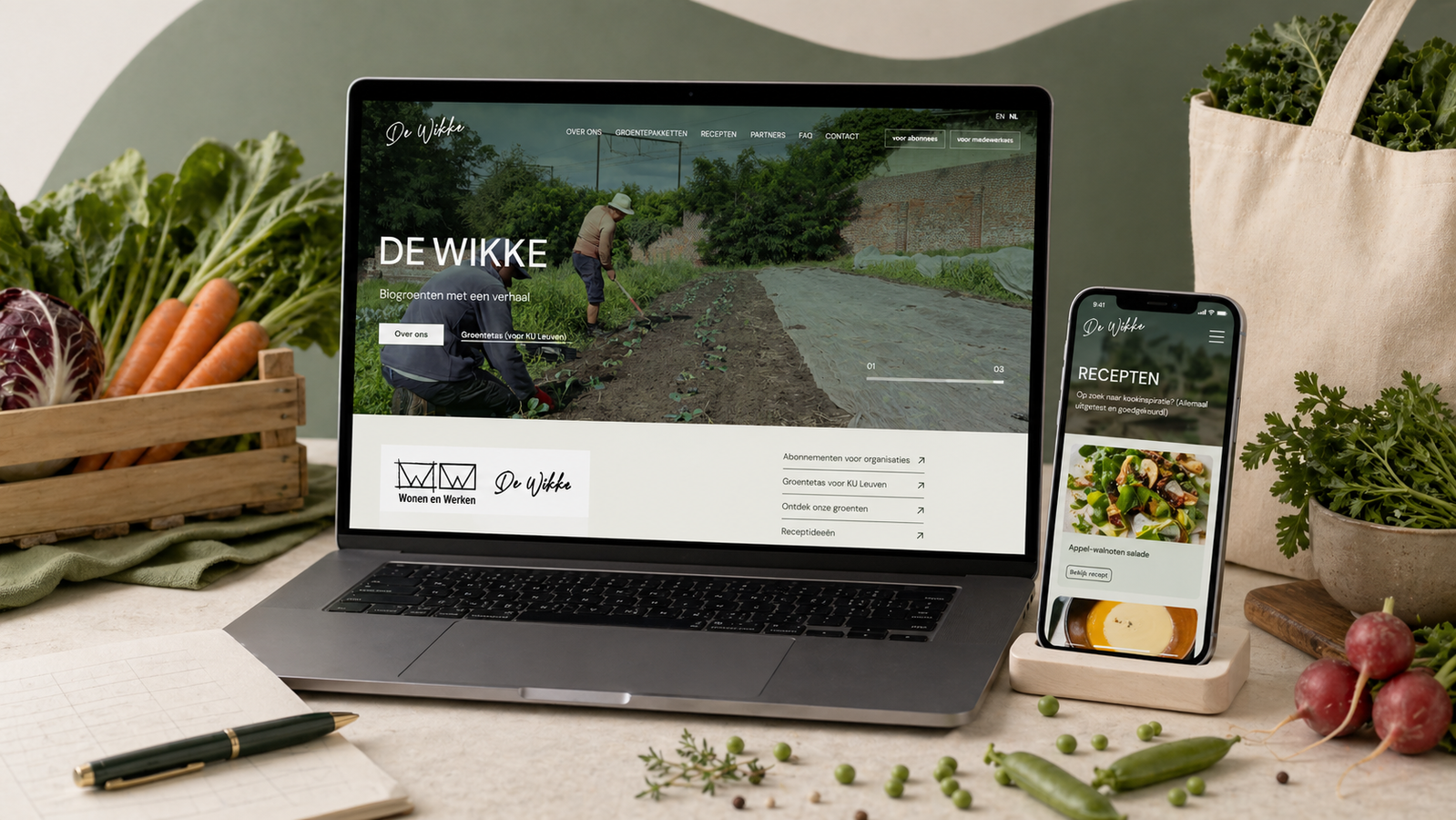
For De Wikke, we designed a website where members choose their vegetable box and collection point. The gardening project can present its produce and manage subscriptions.
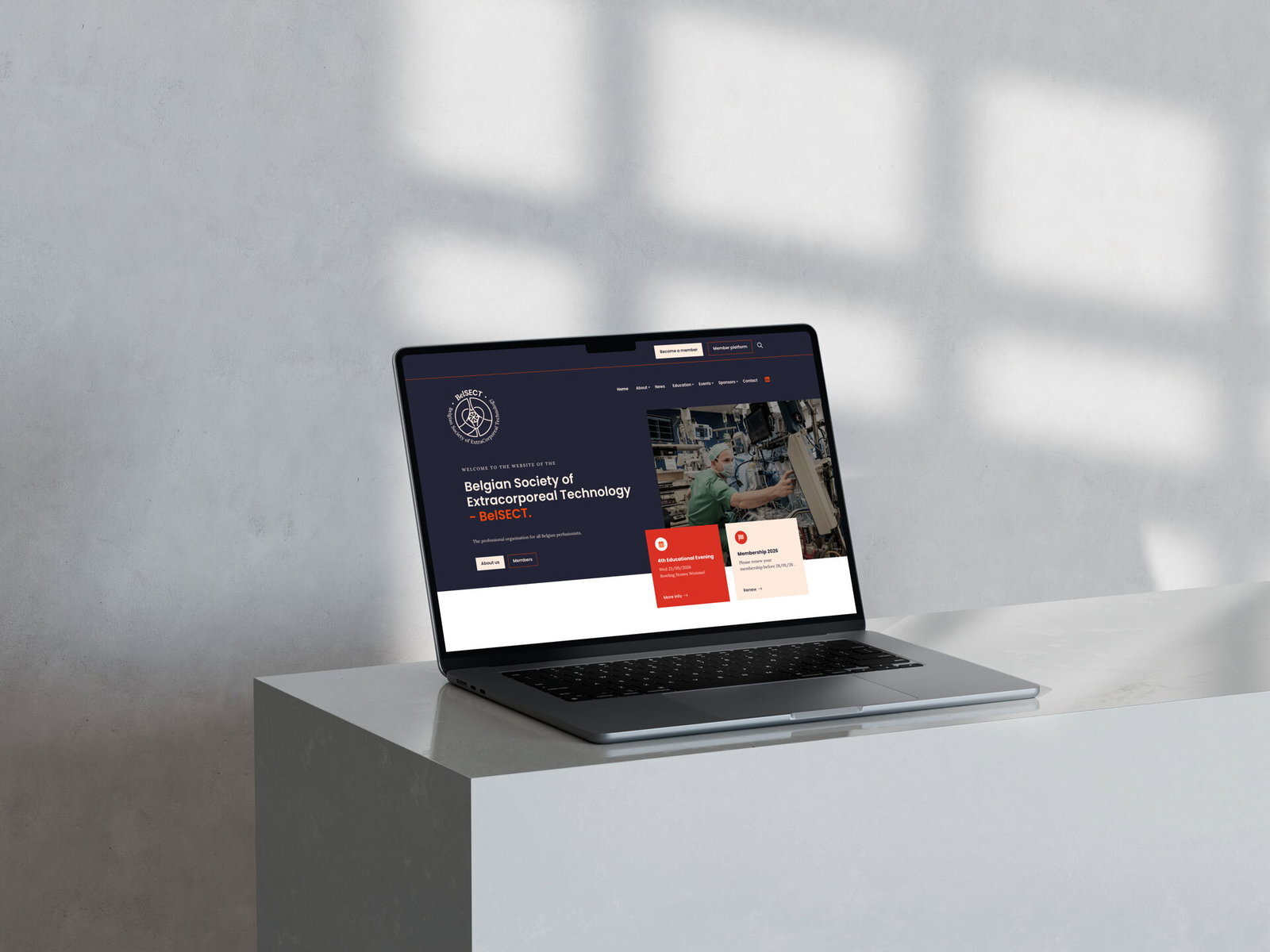
For the Belgian association of perfusionists, we redesigned the website with a members’ area and symposium registration. Information, membership and payments come together in one place.
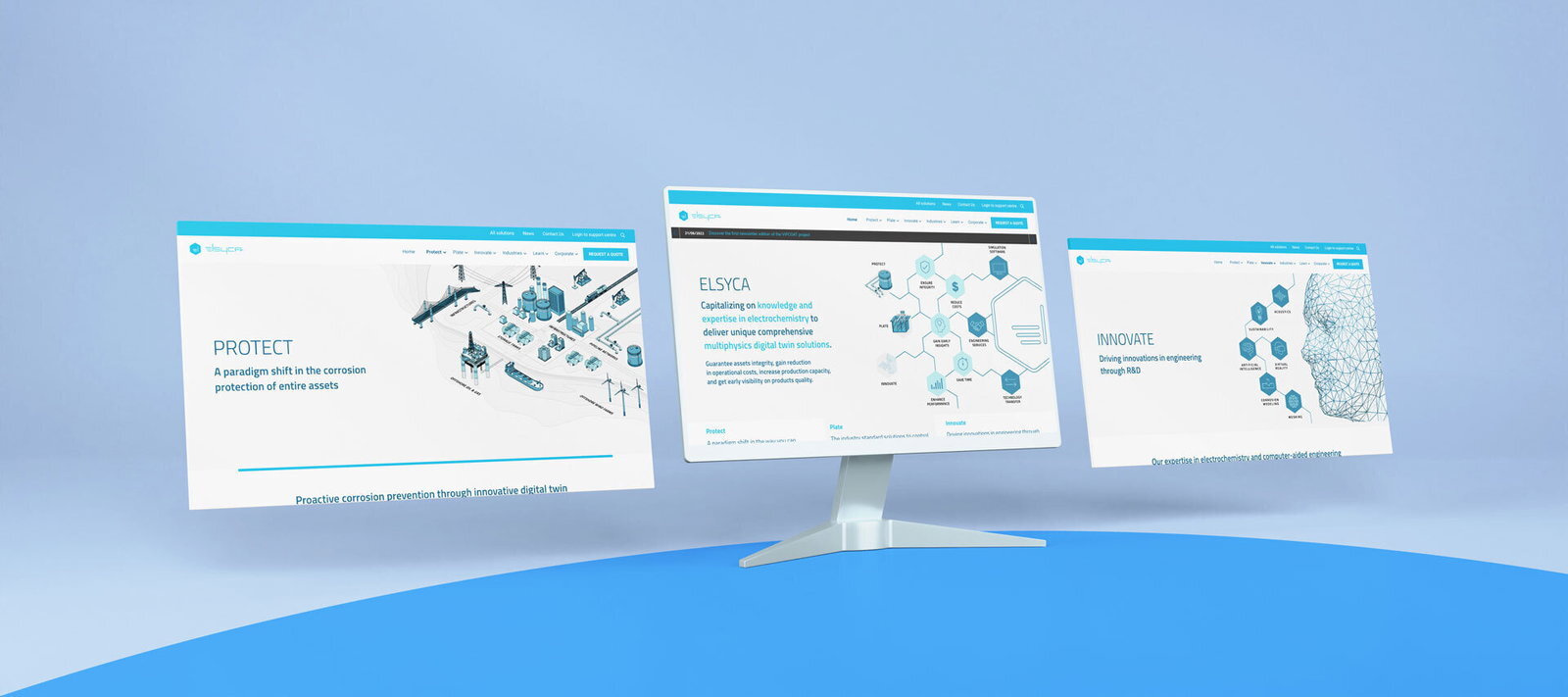
For Elsyca, we redesigned the website and visual identity. The collaboration expanded to include digital marketing, an online support centre and custom software.
If you have a visual identity, we design around it. If you do not, or it is outdated, we start with what exists: logo, colours and voice. For a new logo or a complete visual identity, we work with a partner.
In a first conversation, we look at your content, audience and who will manage the site. You then receive a proposal that sets out what is included and what is not, plus an estimate of the timeline.

It is the design of a website: its structure, user experience, visual design and the agreements that keep the site usable. Web development is the build. At Zenjoy, both sit in one team, so the design matches what the CMS can do.
They research who uses the site and why, set the structure in wireframes, design around real content and visual identity, test for accessibility and across screens, and hand the design over to the people who work in it every day.
Yes, it can create a polished layout. It does not decide what your site needs to do for whom, design around your real content in three languages, measure accessibility or protect the design from three years of editing. It may be enough for a simple page. It is not enough for a site that needs to support your organisation.
We do not price web design by the hour. You receive a project proposal covering research, structure, design and handover, along with what is outside scope. The price depends on the number of page types, languages, the state of your visual identity and how much content is involved. An hourly rate does not capture that.
Yes. We design for a small screen first because most traffic is there, then test in the browsers and on the devices your visitors use.
No. It is designed to prevent that. Blocks in Nimbu have boundaries: an editor chooses content, order and images; the design sets colour, typography and space. A review step and version history let you undo changes.
We do not design a logo or full visual identity ourselves; we work with partners for that. We do translate an existing visual identity to the web: typography, colour, image style and the rules that keep it consistent.
Web design determines a large part of findability: structure, headings, speed and whether content remains readable without JavaScript. We build that in. We work with partners for ongoing SEO.
Allow a few weeks for research, structure and design for a site with clear content. It takes longer when several languages, page types or a large amount of existing content are involved. Content determines the timeline more often than design does.
Send us your current site and tell us what bothers you about it. We will take a look with you.
You will speak with someone who can think through the substance of your project. No obligation, no standard pitch.