
Step by step
A guided wizard for personal bed base and mattress advice, suitable for one or two people.


From product knowledge in the shop to reliable sleep advice on a tablet
A robust PWA that guides salespeople step by step to well-founded advice on bed bases and mattresses.
Client
LS Bedding / NOX
Services
Web application, PWA, UX/UI design, CMS architecture, advice logic, Cloud Code
Sector
Retail / bedding / in-store sales
Duration
Spring to summer 2026
Status
In use, further roll-out
Tech stack
React, TypeScript, TanStack Router, Zustand, Dexie, Nimbu CMS, Nimbu Cloud Code, Vite, Tailwind CSS
NOX does not sell a standard product that you simply drop into an online shopping basket. Good bed advice takes product knowledge, experience and a conversation between salesperson and customer. Especially within the custom-made range, several factors come into play: body build, sleeping position, perspiration, allergies, a preference for a box spring or a slatted base, reading or watching TV in bed and, for couples, the combination of two people.
LS Bedding had already prepared that domain very thoroughly. There was a storyboard, a mood board, decision matrices, flowcharts and a specification with clear requirements. The configurator was not meant to become a web shop, a quotation tool or a stand-alone consumer test. It had to become a sales tool for the shop floor: the salesperson guides, the tablet supports.
The need was easy to recognise. Not every member of shop staff knows every detail of the NOX range. Some salespeople only work at weekends, others are new to the range. Even so, every piece of advice has to feel professional, consistent and premium enough to win the customer’s trust. A mistake or advice that is too generic can later lead to comfort exchanges, exactly what NOX wanted to avoid.
The question for Zenjoy: translate the existing product and advice knowledge into a fast, warm and reliable tablet application that works in the shop, even when the Wi-Fi briefly lets you down.

The project did not start from a blank brief. NOX knew its domain exceptionally well and had already done a lot of the thinking. That made the collaboration strong from the outset: there was a direction, but also room to contribute.
We began by unravelling the decision logic. Which parameters determine a mattress recommendation? When does a preference for a box spring or a slatted base count? What happens when two people share one bed? Which choices are real filters, and which are priorities instead? What product information does a salesperson need during the conversation, and what would only distract the customer?
On paper, the initial request looked like a linear configurator. In practice, there was more depth to it. The advice had to be right for each person, but the bed base is shared. The system therefore had to combine individual mattress recommendations with one shared bed base recommendation. On top of that, the expert advice had to remain visible while the salesperson can still look at and explain alternatives.
Because the client knew the domain so well, we could sharpen the content quickly. At the same time, some analyses, logic and structures changed for the better during the project. Not because the brief was unclear, but because the conversations were concrete enough to discover better choices.
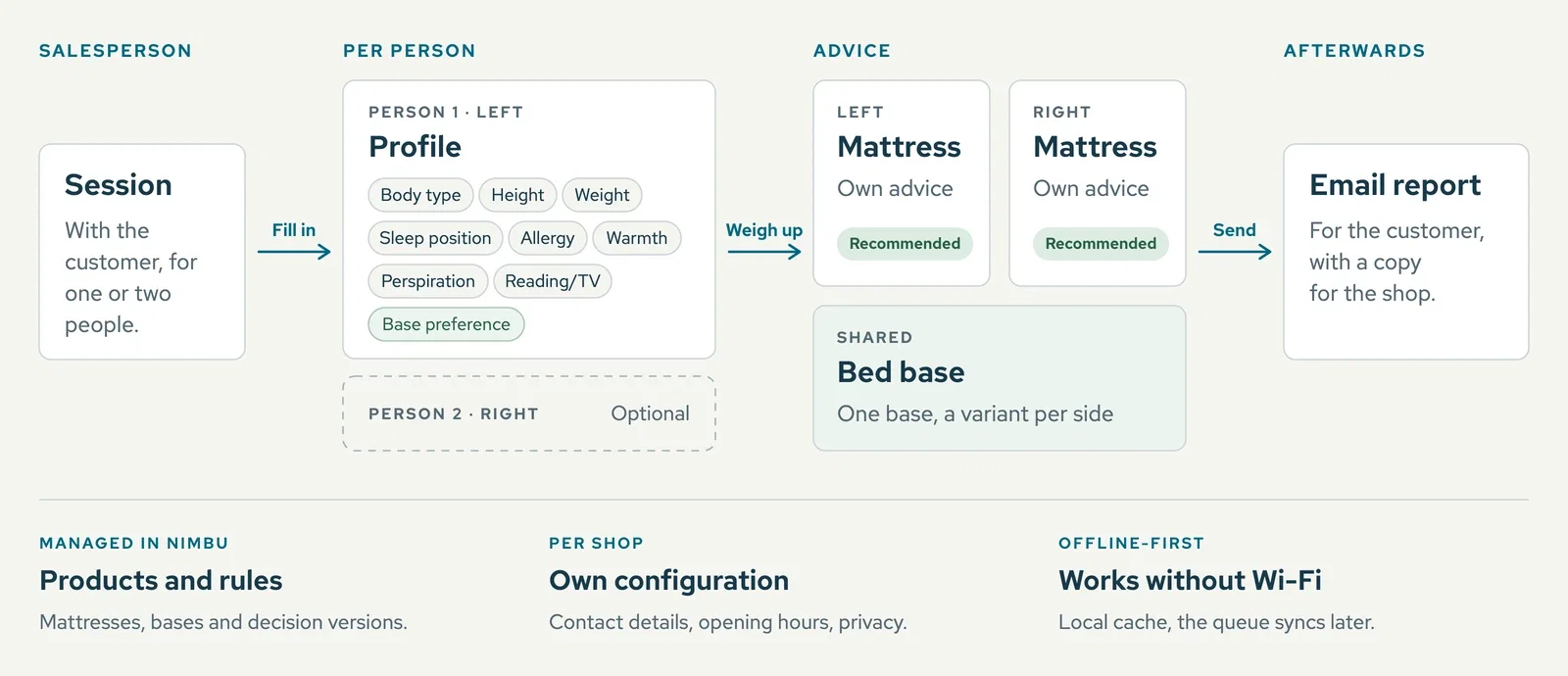
The configurator was going to be used in a shop. That shapes everything: the pace, the readability, the buttons, the imagery, the feedback and the amount of text on screen.
We built the flow as a guided wizard with five steps. The salesperson can move through the conversation step by step, go back without losing choices and work for one or two people. The interface uses large interactive choices, clear progress and product images that match NOX’s warm look and feel. Specifications and detailed information are close at hand, but never in the way.
The application deliberately does not feel like an administrative form. It supports the conversation. The customer sees what is happening, the salesperson stays in control, and the advice remains transparent enough to be credible.


The advice engine is the core of the application. It combines body profile, height, weight class, sleeping position, perspiration, allergies, sensitivity to warmth, reading and TV habits and bed base preference with the current product range.
We chose a clear separation between domain logic and presentation. The decisions live in pure TypeScript modules, with tests covering body profiles, BMI and weight classes, mattress selection, bed base selection and priorities, among other things. The UI shows the result, but does not set the rules.
That proved important as the product logic was refined. Families and variants for custom-made bed bases were added later, for example, with each side of the bed able to get its own variant label. Because the advice logic was separate and tested, we could add that refinement without overhauling the whole flow.

NOX wanted the configurator to grow with its range. That is why we made the product and configuration layer as CMS-driven as possible.
In Nimbu we manage mattresses, bed bases, base types, sleeping positions, perspiration types, weight classes, body profiles, BMI bands, product images, legal texts, shop configurations, active decision versions and images for each wizard step, among other things. The shop details for the email output, such as contact details, opening hours and a personal message, also live in the CMS.
This approach gives LS Bedding control without every text change or product update immediately requiring a new release. At the same time, the advice logic stays strict enough: the application validates the configuration, ignores incomplete combinations and does not simply fall back on unreliable data.

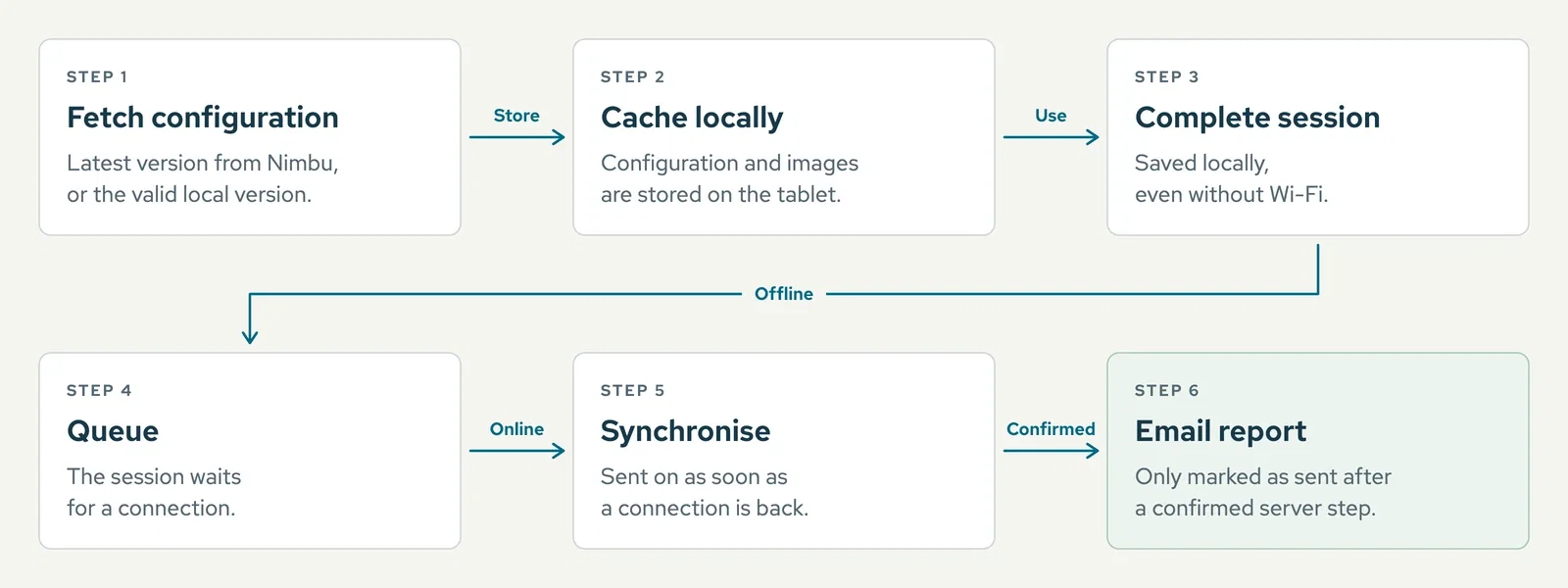
A shop is not an office. Tablets sit in showroom corners, Wi-Fi is not equally strong everywhere, and a sales conversation should not grind to a halt because a request hangs.
That is why we built the configurator as a robust PWA. The active configuration and images are cached locally. Sessions are stored locally and sent on later through an offline queue. The app first tries to fetch the latest configuration, but can fall back on a valid local version when the connection drops.
Sending emails is also deliberately tied to session statuses. An advice report only counts as sent once the right server step has been saved. In doubtful cases the status stays visible, so there are no silent duplicate sends or lost reports.
The configurator processes personal data: physical characteristics, sleeping habits and an email address to send the advice report. That called for clear boundaries.
We built in consent for the analysis, a privacy statement and a legal note explaining that the advice is generated automatically and is not medical or therapeutic advice. The application stores what is needed for the advice and the follow-up, but avoids unnecessary medical data. The email output contains a summary for the customer and a copy for the shop, so the sales conversation can be followed up afterwards.
The result is a robust tablet PWA for the shop floor: warm to use, technically solid and highly manageable through Nimbu.
A guided wizard for personal bed base and mattress advice, suitable for one or two people.
An advice engine that combines body profile, weight class, sleeping position, perspiration, allergies, sensitivity to warmth, reading and TV habits and bed base preference.
A clear distinction between individual mattress advice and shared bed base advice.
Product detail pages with images, specifications and explanations, so the salesperson can discuss alternatives without losing sight of the expert advice.
Shop accounts with their own configuration, email details, footer, privacy texts and active decision version.
A CMS-driven product catalogue with mattresses, bed bases, variants, priorities, images and configuration rules.
An offline cache and queue, so the flow remains usable in far corners of shops where Wi-Fi is not always immediately available.
Email output with the advice report, shop details, a personal message, privacy references and a cc to the point of sale.
The biggest gain is not just in the technology. It lies in the consistency of the sales conversation. A salesperson gets support without being replaced. The customer gets professional, visually strong advice. And NOX keeps control over its brand experience, product logic and future changes.


"Very satisfied with how the project went, you really think and test along with us. I would definitely recommend Zenjoy. And I don’t say that often about IT partners."
Brecht Holvoet, R&D Manager, LS Bedding
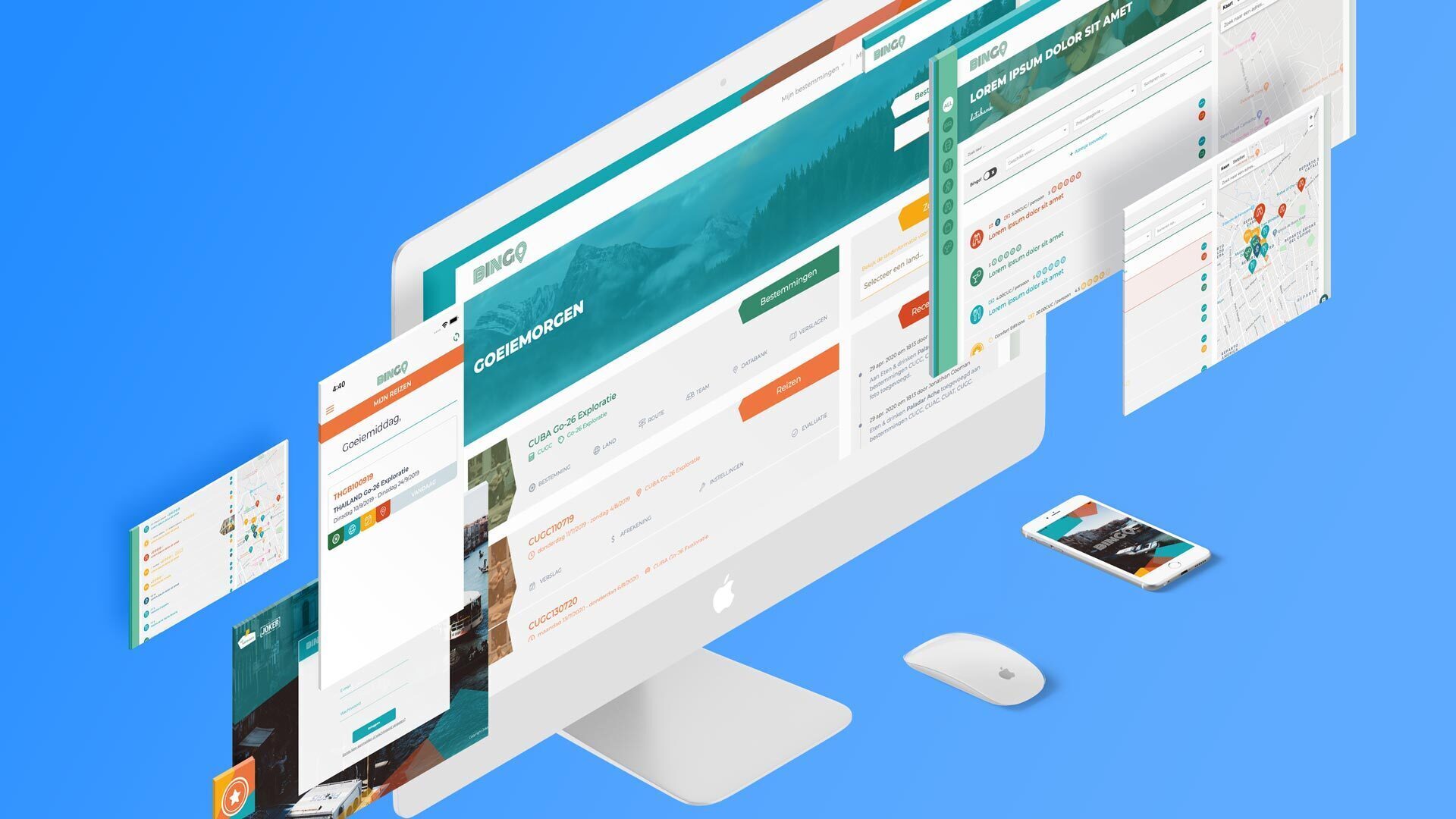
Karavaan & Joker faced the challenge of digitalising the collaboration between volunteers and the organisation.
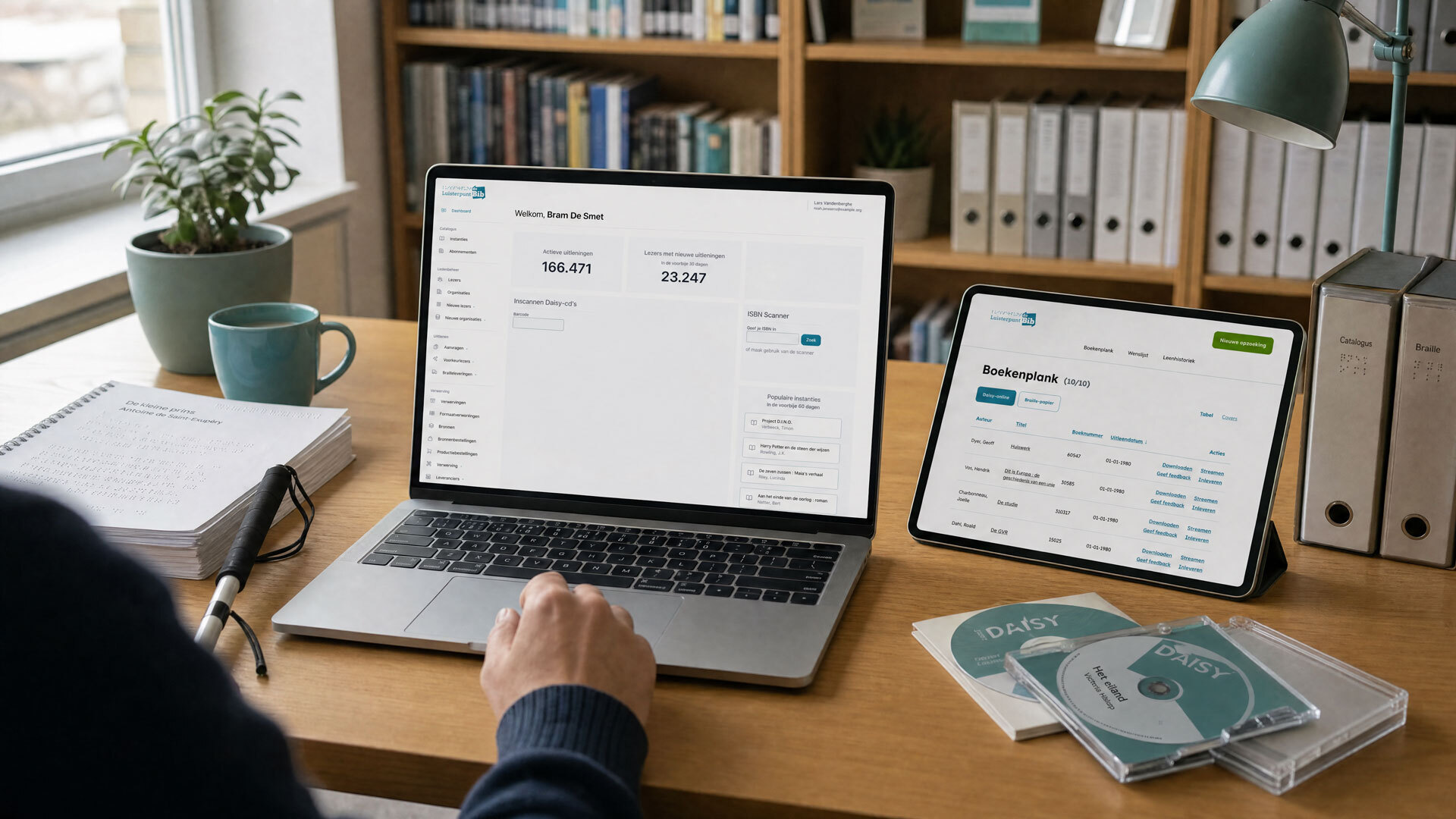
From DOS codes and misused data fields to a platform that supports Luisterpunt’s day-to-day operations.
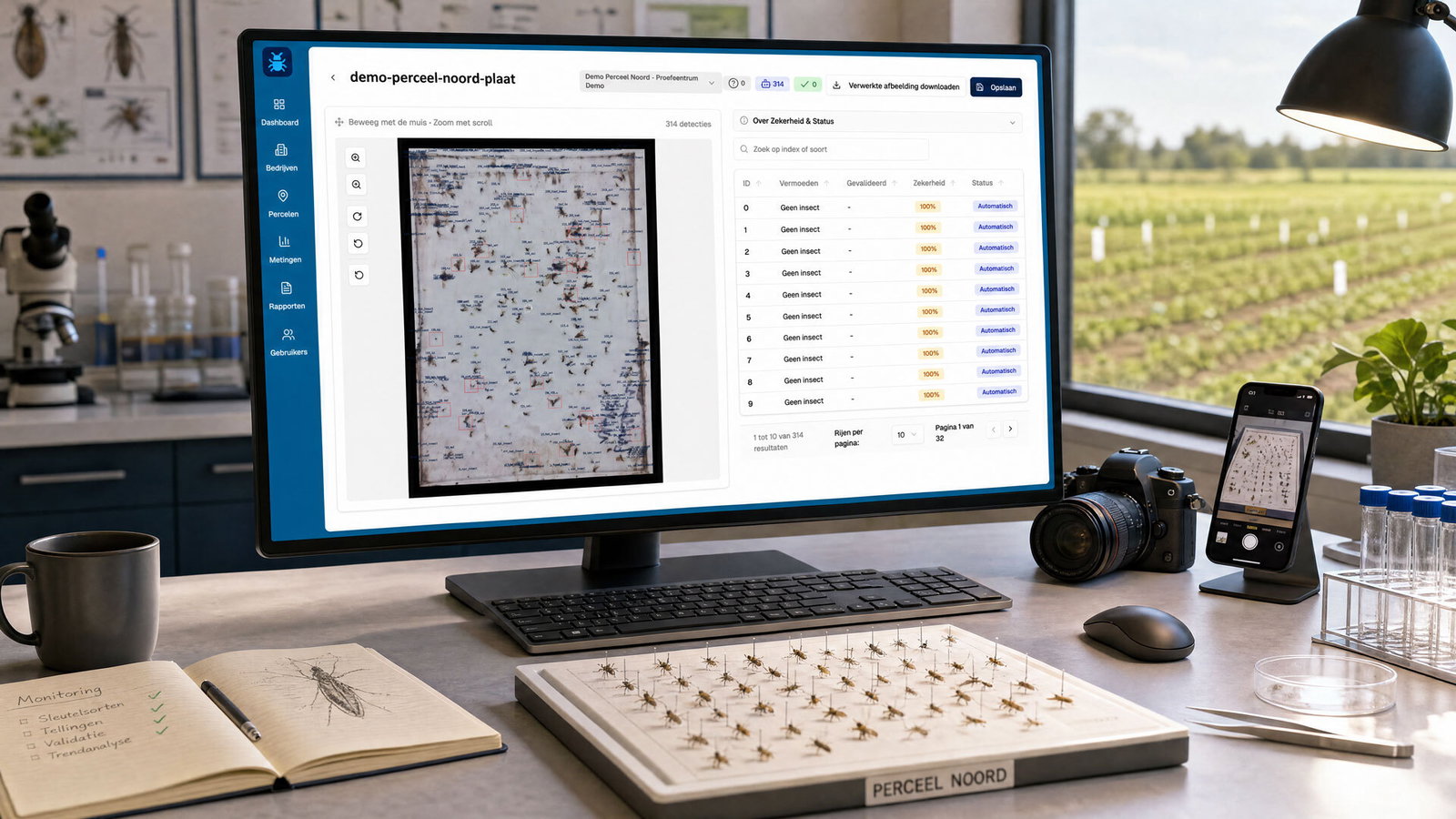
Growers and research centres process field photos, receive automatic alerts and export reports. KU Leuven can host the system itself.
We would be happy to help. Tell us what your organisation wants to achieve and what is getting in the way.
You will speak directly with someone who understands your project.