
Remote participation
Participants take part in the classroom, at an open day or from home, with or without a facilitator.


From cutting and pasting to digital participation for children and young people
Children and young people help design their play spaces, from workshop to policy decision.
Client
Kind en Samenleving
Zenjoy services
Co-creation workshop, concept development, web app development, analytics and statistics, licensing model
Sector
Children’s rights, participation and spatial planning
Duration
2023-2024
Status
Live and in use at pictoplay.be
Technology
Nimbu CMS, Nimbu Cloud Code, React and TypeScript
For fifty years, Kind en Samenleving has been translating the experiences and wishes of children and young people into policy, public space and mobility. Their best-known participation tool is PictoPlay, an analogue method from 2014. Children “buy” pictograms with a fictional budget – for greenery, play equipment, meeting places or street furniture – and stick them onto a plan or aerial photo of the place being redesigned. The price tags force them to make choices and get the group talking.
The method worked, but it was hard to scale. Every session took materials and preparation: printing plans, cutting out icons, gluing collages and afterwards manually turning everything into a summary report. What children expressed across all those plans stayed locked in separate collages. Broader insights across projects were hard to gather.
The pandemic made it clear that participation also had to work remotely. Municipalities also wanted to use the method on their own, including with children taking part individually or from home. After a call for proposals, Kind en Samenleving chose Zenjoy to take PictoPlay digital without losing what makes the analogue method strong.
In January 2023, we kicked off with a co-creation workshop. Around the table were staff from Kind en Samenleving and people from the field, including an outdoor space coordinator and Bosplus. Using event storming, we mapped how a PictoPlay session currently runs. Then, step by step, we looked at what could be better digitally and what risked being lost.
That second question carried as much weight as the first. A digital tool is less versatile than paper and scissors, and children talk less spontaneously when they each sit behind a screen. The workshop also produced clear guidelines: the tool had to work for groups and individuals, and the results had to be exportable for further use in familiar tools, without the platform itself having to write full reports. Wireframes and a first financial model laid the foundation for what we built next.
Setting up a tailored workshop
No two participation projects are the same. A school playground calls for different choices than a neighbourhood park, and teenagers for different ones than primary school children. That is why the facilitator configures each workshop themselves, from a template or from scratch.
First come the welcome and thank-you texts that participants see. Then the game rules: the available budget in a currency of their choice and a time limit per round. The facilitator also chooses which pictograms are included and adjusts the price per pictogram where needed. A large piece of play equipment can weigh more heavily on the budget than a bench. Finally come the base map, the zones and, optionally, photos of the location, so participants recognise the place.
Once everything is ready, the facilitator publishes the workshop and shares the participant link. The workshop stays open within the set period and then closes automatically.


A game in four rounds
A digital session follows the rhythm of the analogue method, in four rounds. First, participants choose their favourite pictograms. Then they click and drag them onto the map, within the budget the facilitator set. In the third round, they draw and write to clarify their design. Finally, they look at other groups' designs and react with emojis.
This way, the game leaves room for what the workshop flagged as a risk: their own creativity alongside the fixed icons, and a conversation about each other's choices.


Map, photo or abstract view
A link with Google Maps or Street View seemed the obvious choice at first, but it turned out to be the most uncertain part. Together, we chose a simpler, more flexible starting point: the facilitator uploads their own plan, aerial photo or collage as the base map. On top of it, the facilitator draws zones, such as a play area or a green edge. Those zones took priority over Street View because they deliver more: the platform automatically counts per zone which facilities children want there.

In May 2024, Kind en Samenleving presented the first test version at the celebration of its fiftieth anniversary. An extensive testing phase followed. The feedback led to concrete changes. Children, for example, spent unexpectedly long choosing abstract avatars for their group. Fun, but not practical, so groups now use initials. Kind en Samenleving developed the content over the summer, and PictoPlay went live on 25 September 2024.

Today, PictoPlay is a digital participation tool for playgrounds, school playgrounds and neighbourhoods. This gives children and young people a real voice in the spaces where they grow up, and gives those who design those spaces or make policy about them well-founded insight into what they want.
Participants take part in the classroom, at an open day or from home, with or without a facilitator.
For each workshop, an instant overview by category, zone and group, ready to print or save as a PDF.
Kind en Samenleving compares results by province, age or type of design.
Kind en Samenleving adds new pictograms, categories and templates on its own.
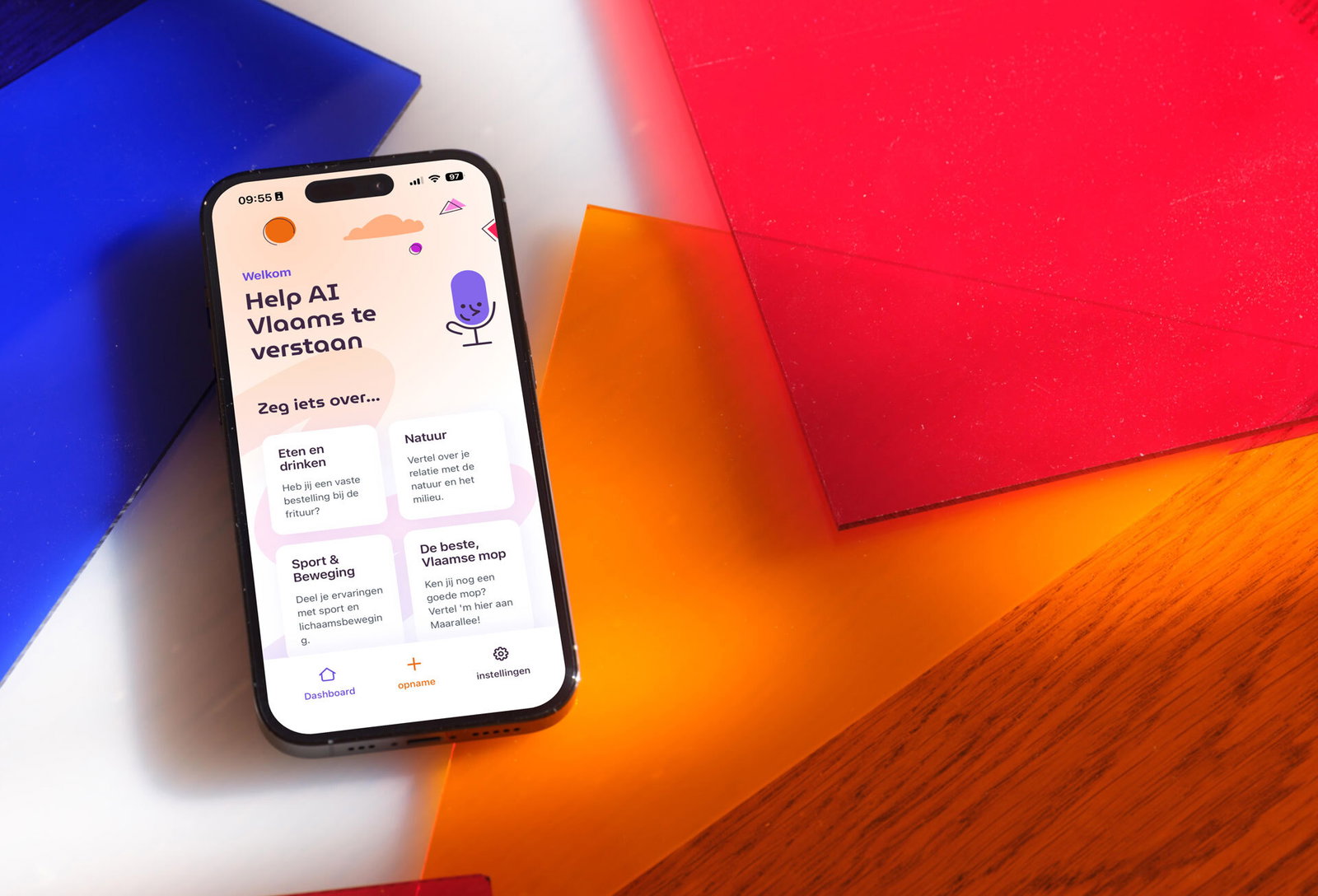
A lean citizen-science app that lets Scivil collect spoken Flemish for research into better speech recognition, without a heavy platform behind it.
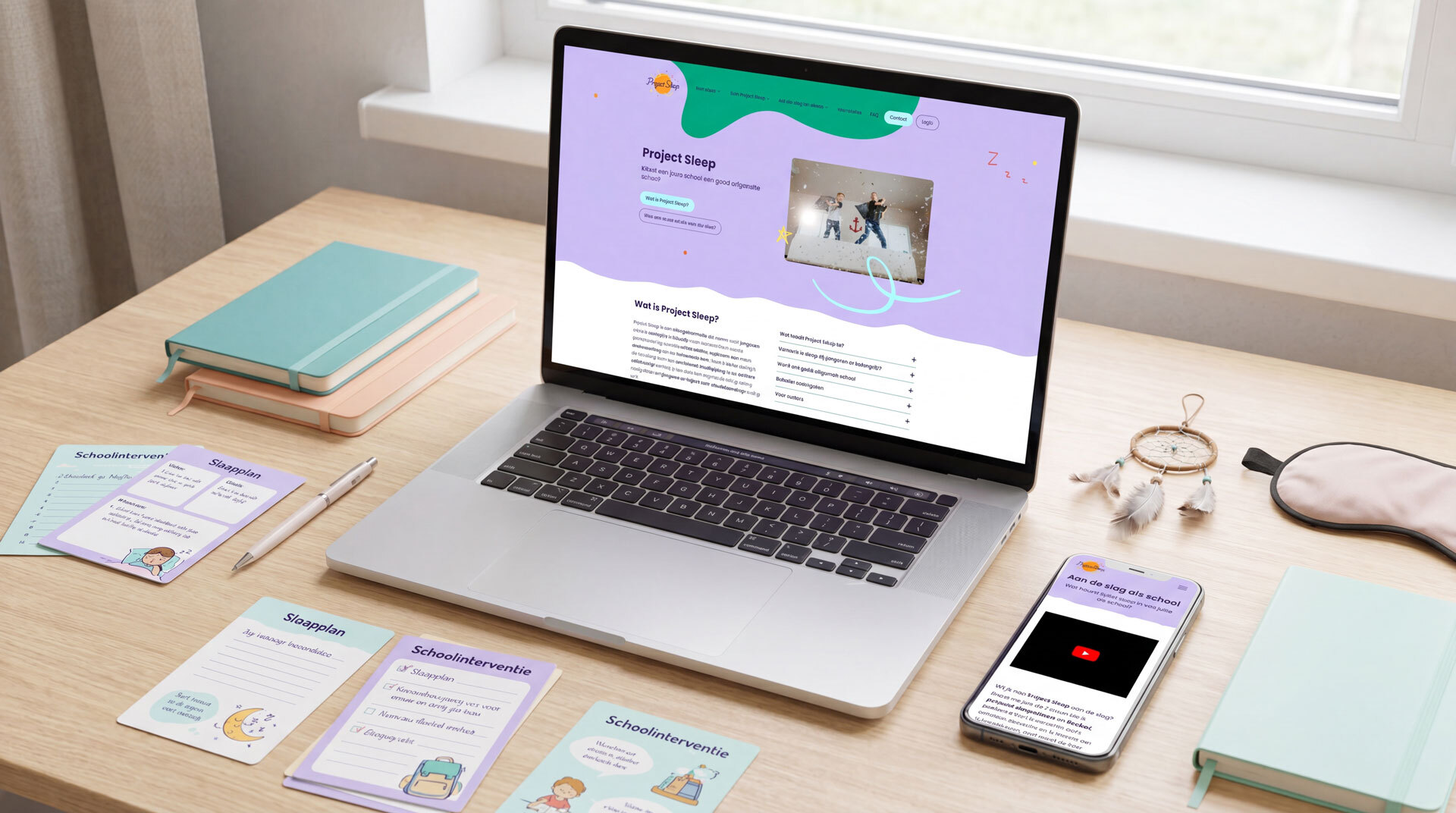
A public information platform and a private programme for schools, with onboarding, roles, phases and resources. Designed with three schools and scientifically evaluated.
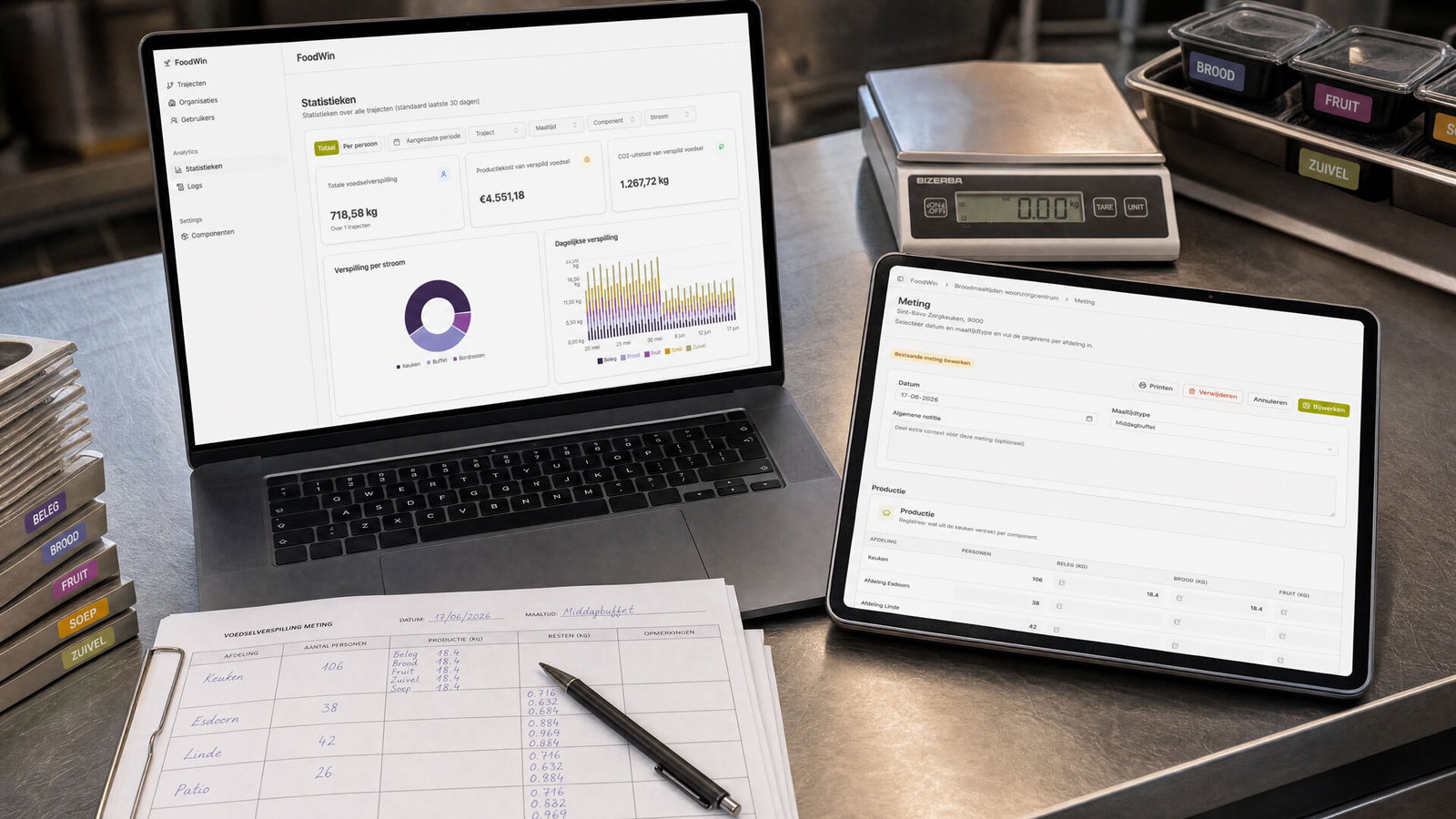
After taking over FoodWin, Rikolto applies a proven method against food waste in large-scale kitchens. The process works well, but the supporting tooling did not. That's what brought them to us.
We're happy to think it through with you.
You'll talk straight away with someone who engages with the substance.