Half-day workshop
A shared foundation, then straight into practice on tasks from your own work. Your team can apply what it learns the very next day.


AI workshops and training
Zenjoy is a digital product studio in Leuven that runs AI workshops and training together with Ethic.studio. Your team practises with ChatGPT, Microsoft Copilot or Gemini on tasks from its own work, and together we make clear what is and isn't allowed. As a half-day workshop, a training day, a programme over several weeks or a talk.
A short call with one of our trainers. No obligation.

What is a custom AI workshop?
A hands-on session in which your team learns to use AI on examples from its own work, with the software you already have. We have worked with artificial intelligence every day since 2022 and build AI workflows for clients.
Our whole team has worked with AI every day since ChatGPT launched in November 2022: in research, design, code and documentation. What we learned along the way, and what we dropped again, goes into every training session.
Colleagues paste texts and case files into ChatGPT or Copilot. Which data belongs there, and which doesn't, hasn't been agreed yet.
After a generic course, everyone soon goes back to the old way of working. Practising on your own recurring tasks is what makes the difference.
A few colleagues are well ahead, the rest hesitate to start. A shared foundation brings everyone to the same point.
It stops at the odd summary. You want to know which tasks it really saves time on.
AI training only works if your team works differently the week after. That's why we practise on your own work.
Choose a workshop, a training day, a programme or a talk. You can also combine them.
A shared foundation, then straight into practice on tasks from your own work. Your team can apply what it learns the very next day.
A full day: lay the foundation, then practise long enough on your own tasks until it becomes second nature.
Several sessions with time in between. Your team tries AI out in real work and brings questions and results to the next session.
For a study day, staff day or conference: what AI can do in your sector today, and what it can't. Can be combined with workshops in smaller groups.
Every AI training combines one or more of these four building blocks. Which ones depends on who is in the room.
For everyone
What AI can do, what it can't, and what you shouldn't put into it. How generative AI works, where it makes mistakes and how to check an answer critically. That is how you learn to use AI safely: the AI literacy the law asks for.
For every role
ChatGPT, Copilot or Gemini, on tasks that come back every week. With the chatbot or assistant you already use: emails, reports, summaries or research. You learn to write prompts with familiar examples from your own organisation.
For those who want to go further
From one-off chatbot questions to a set way of working. We show how a recurring task becomes a workflow, and when that is worth it. Having that workflow built is a separate step.
For leadership and management
Room for your team, within clear boundaries. Where you want to use AI, which applications fit the way you work, which data may go in and who checks what.
120 participants in total, and a team that works with AI every day itself.
100 teachers
In February 2026 we gave a plenary session at A.R.T. Tienen, followed by AI sessions in smaller groups.
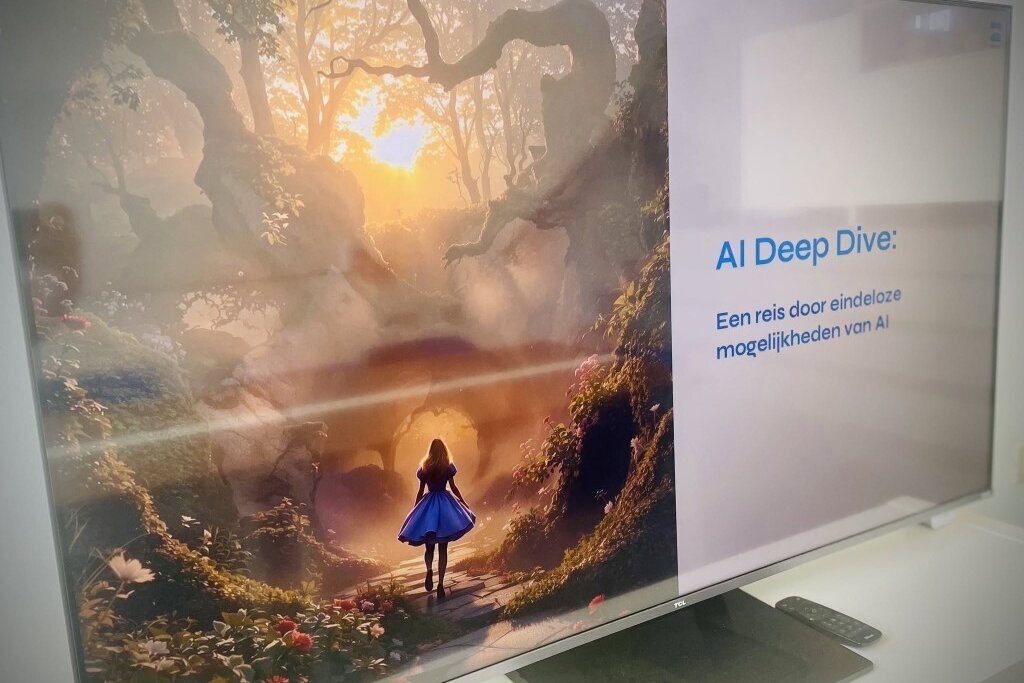
The AI Deep Dive is our own open training. In June 2025, twenty participants worked on the AI landscape, prompting and a responsible AI policy.
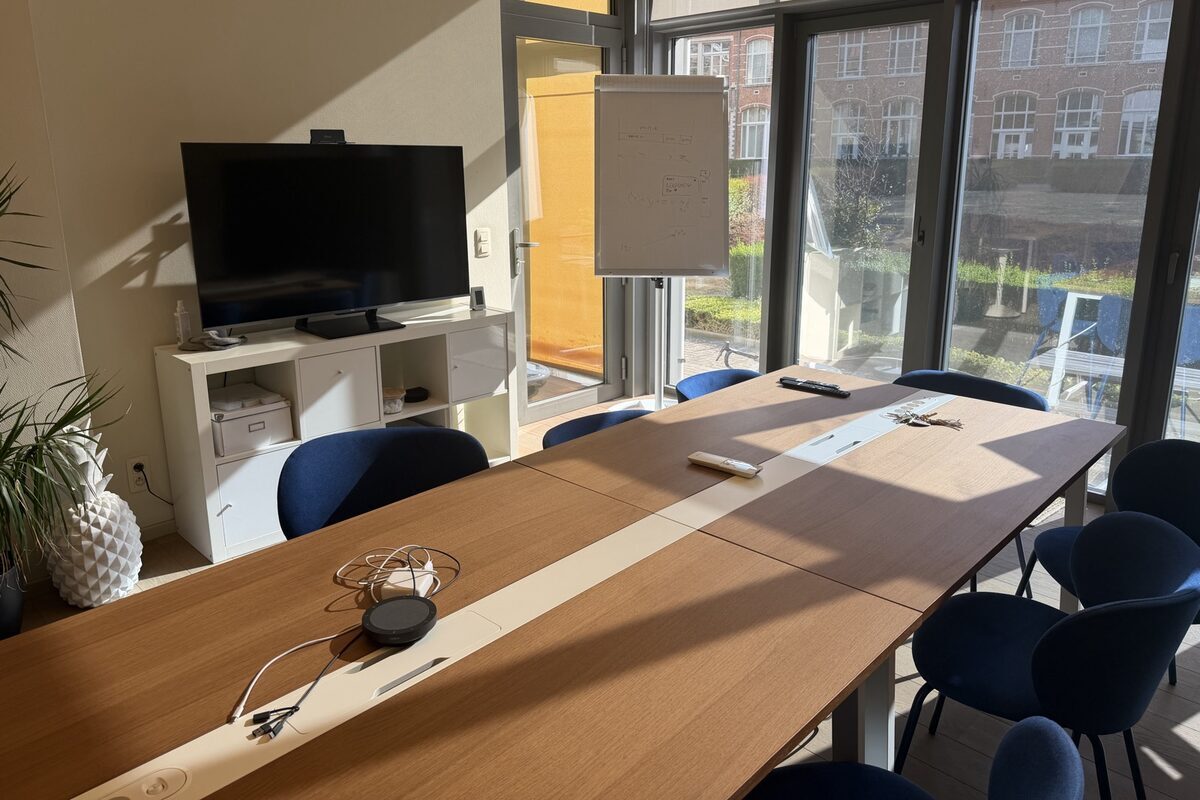
Tools chosen and dropped again, our own AI policy and AI workflows for clients. That practice gives us the examples for every session.
Before every session we ask which tasks your team does often, which software you use and which agreements on data are already in place. We build the exercises around that. Someone in HR practises on different tasks from a researcher or a director.
We work for social profit and wellbeing, associations and federations, research and healthcare, as well as schools and companies. Zenjoy and Ethic.studio deliver the training together. Zenjoy has designed and built digital products since 2011. Ethic.studio brings expertise in responsible AI and data governance.
A short call with one of our trainers: who is taking part, which software do you use and what should your team be able to do afterwards?
You receive a proposal with the format, the content and a fixed scope.
We collect examples of real tasks and look at the agreements already in place.
Brief explanations and plenty of practice, with the programs you use.
Your team applies what it learned to its own work. In a programme, we discuss questions and results in the next session.
Three services, three questions.
| AI Roadmap | AI workshop or training | AI workflows | |
|---|---|---|---|
| Your question | What do we do with AI, and what comes first? | How does our team learn to work well with AI? | Can AI take over this recurring task? |
| What you get | A working day with your team and an advisory report with a step-by-step plan | A team that uses AI safely and purposefully in its own work | A pilot for one workflow, with human oversight |
| Format | Preparation, working day, advisory report, follow-up | Half day, training day, programme or talk | A clearly scoped pilot around one process |
One specific question about AI? Then an AI Pitstop will do: one hour of advice on your own situation.
The AI Deep Dive is our open training, for anyone who wants to join on their own or with a few colleagues first. You sit with people from other organisations and learn to apply AI to your own work. The date of the next edition will follow.
Article 4 of the European AI Act has applied since 2 February 2025. Organisations that use AI systems must take measures to support the AI literacy of their staff. Since the amendment of July 2026, this is an obligation of effort. You don't have to guarantee a set level per person. You do have to take measures that fit your staff's knowledge and experience and the way they use AI.
Being AI literate means knowing how the software you use works, where it makes mistakes and how to judge a result. What that takes depends on the role. A researcher needs different knowledge from a colleague in the front office.
The law doesn't prescribe a set course or certificate. Training built on your own work is a concrete measure you can document. This is not legal advice about your obligations.
Yes, if you use AI systems, and almost every organisation that works with a chatbot does. Article 4 of the AI Act has applied since 2 February 2025 and, since July 2026, asks you to take measures that support your staff's AI literacy. A set course or certificate is not required. Training built on your own work is a concrete step you can demonstrate.
We start from your organisation's own tasks and agreements. A general course teaches everyone the same tricks on the same examples. With us, your team practises on work that comes back the following week, and that is what sticks.
That depends on the format, the number of groups or parallel sessions, how much preparation on your own tasks is needed and whether there is a follow-up. After the introductory call you receive a proposal with a fixed scope, so you know in advance what your team will get.
No. People who have never worked with artificial intelligence learn the basics. Those who are further along go deeper into better prompts and workflows. In a mixed group, we take both into account.
A workshop takes half a day, a training day a full day, and a programme runs over several weeks. We split a large group into sessions with smaller groups, as we did for the 100 teachers at A.R.T. Tienen.
With whatever you use or want to use: ChatGPT, Microsoft 365 Copilot, Gemini or another application. Haven't chosen yet? Then we compare which tool fits your work and your data.
Which data you should and shouldn't put into a chatbot is one of the first things your team learns, with attention to privacy, ethics, GDPR and the settings of the tools you use.
With AI Roadmap you decide what your organisation does with AI and what comes first: a working day with your team and an advisory report. A workshop or training teaches your people to work with AI. Not sure yet where you want to go? Start with AI Roadmap.
Yes, through the AI Deep Dive, our open training with participants from different organisations. The last edition had twenty participants from non-profits and companies.
Tell us who is taking part and which software you use. We'll help you find a format that fits.
You talk to one of our trainers. No obligation, no standard pitch.