Skip navigation

MICAS

A research website that stays up to date automatically

Client
MICAS, a research division of ESAT at KU Leuven

Services
Web platform, UX and design, integrations, hosting and support

Sector
Research and higher education

Timeline
Six months, from kick-off in August 2022 to launch on 17 February 2023

Status
Live at micas.esat.kuleuven.be since February 2023, with ongoing support

Tech stack
Nimbu, Liquid, Alpine.js, Bootstrap 5, Nimbu Cloud Code, SAML (ESAT login), Lirias/Libis API, KU Leuven organisational chart API

At a glance

Challenge

MICAS is the microelectronics and sensors division of ESAT at KU Leuven. The team has around 80 members: professors, PhD researchers and other staff. Their website depended on a central web platform, the publication list was maintained by hand, and an earlier redesign had stalled. Researchers could not share their own work without someone else's help.

Solution

A platform where every researcher signs in with their KU Leuven ESAT account and manages their own profile, research topics and chips. PhD researchers submit content; professors approve it. Publications are imported from Lirias every night, and the team list is updated weekly from KU Leuven's organisational chart.

Result

The site has been running since February 2023 with little maintenance. More than 3,000 publications, dating from 1979 to the present, 111 chips and 66 research topics are online without anyone at MICAS having to maintain the listings manually. The collaboration grew to include yearbooks and a support agreement.

The brief

MICAS designs chips. Analogue and digital circuits, sensors, neural processors and RF circuits are the work of around six professors and 65 researchers, supported by technical and administrative staff. Anyone getting to know MICAS wants to see three things: who works there, what they work on and what they have achieved.

The old website struggled to show this. It sat within the department's web platform. Research information was scattered across the labs. The publication list was updated by hand. Seminar contacts were stored in an old address file. And anyone with a non-technical question could not find the right person to contact on the site.

An earlier redesign had produced wireframes and an initial design, but never reached a working website. In spring 2022, MICAS looked for a partner who could finish the project and hand the site over to them. Professors and PhD researchers needed to share their own research without every change going through a webmaster or central service. And the publication list should never need to be updated by hand again.


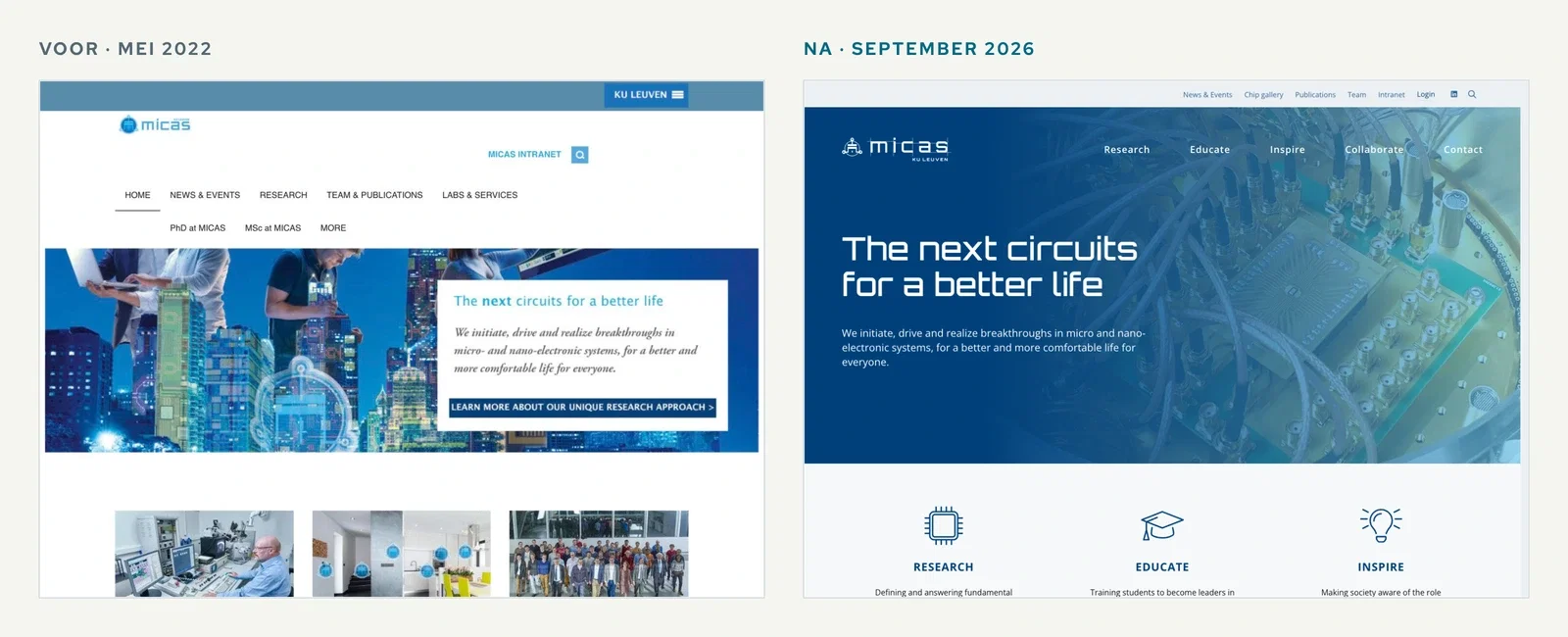
The MICAS homepage in May 2022 and September 2026

Sign in with the account you already have

Nobody at MICAS wanted another password. We connected the site to the ESAT login through SAML, using the same login researchers use for their email, including KU Leuven's authenticator. The login page has just one button.

On the first login, the platform automatically creates an account and links it to the right team profile using the email address. Professors immediately receive editing rights for their research domains. PhD researchers get their own profile and topics. No webmaster needs to create accounts.

That sounded simpler than it was. Email addresses used for login did not always match those in the university's Who's Who directory: some contained capital letters, and some domains included "esat" while others did not. We normalised the addresses and maintained a few exceptions manually.

MICAS had already spent considerable time discussing the design internally. We kept the structure and look of the existing wireframes and improved what we could: larger icons, rotating header photos and a collage of chips above the gallery. The content came first; the design followed.

Research topics awaiting approval in the MICAS dashboard

Edit in a draft

The dashboard is the heart of the platform. When researchers sign in, they see their profile, research topics, chips and the domains they can contribute to. They never edit the live page. Every change is made in a draft that they can preview in the actual page layout before submitting it.

Publishing rights depend on the person's role. Professors publish directly. PhD researchers submit their work for approval, which sends the professors in that research domain an email with a link to the pending content. They can approve it or send it back in the browser.

Our first version assigned editing rights to user accounts. In practice, professors wanted to manage permissions themselves, topic by topic. So we reversed the approach: each topic, domain and chip now holds its own list of people who can edit it.

MICAS decided internally that PhD researchers could create topics and professors would approve them. We built the workflow they agreed on. This required features Nimbu did not yet have: drafts for channel pages and SAML login. Both have since become part of the platform, available to other sites too.

The workflow from draft to publication on the MICAS website

Publications imported from Lirias

Every night, the platform retrieves MICAS publications from Lirias, KU Leuven's publication database. The first import went back to 1979. Since then, the scheduled task has only checked the current and previous year.

The challenge was linking the records, rather than retrieving them. A publication can only be linked to a researcher if the platform knows that "Verhelst M." is the same person as the team profile. We match records using the KU Leuven staff number supplied by Lirias. This makes the filters work, puts each paper on its authors' profiles and gives every research domain its own publication list.

The team list also comes from an external source: the university's organisational chart, synchronised weekly, with the official photo from the Who's Who directory. People who leave MICAS disappear from the team list but remain available to select as authors.

The structure of the Lirias API has changed twice since launch. In early 2025, we found that publications were no longer being linked to their authors. We repaired the matching as part of our support work.

The MICAS publications page with filters for research domain, team member, type and year

Each chip linked to its paper

The chip gallery presents the chips MICAS has designed since 2010, with a photo, technology and application for each. Every chip is linked to a paper.

Instead of retyping a citation, researchers adding a chip search Lirias directly from the form and select the paper. Everything is then ready: the chip page displays the reference and links to the source.

A second phase followed the launch: sending seminar invitations automatically, including for seminars that are not publicly listed on the site. Contacts are organised into audience groups, an event is scheduled, and the email is assembled automatically when it is sent. Administrative staff prepare a preview, schedule the message and can leave the rest to the system.

Form for linking a Lirias paper to a MICAS chip

MICAS went live on 17 February 2023, just before ISSCC, so the division could announce the new site at the conference. The old URLs have redirected to the new pages ever since. Adding a topic or chip, or updating a profile, is now something researchers do themselves in their dashboard. The site is a working tool maintained by the division, rather than a brochure updated from time to time.

The collaboration continued beyond the website. Since 2023, we have produced the annual MICAS Highlights yearbook, now in its fourth edition, as well as the New Year card. Further platform work included a staging environment, links between chips and papers, and the seminar email system. A support agreement has been in place since 2025, with the Lirias integration as its first priority.

Results

Researchers share their own work

Around 80 people manage their own profiles, topics and chips: professors, PhD researchers and staff. They sign in with their ESAT account. PhD researchers submit content, and professors approve it through a link in an email. Nobody waits for a webmaster.

A publication list that stays up to date effortlessly

More than 3,000 publications dating back to 1979 are kept up to date through a nightly sync with Lirias and automatically linked to the right author and research domain. The team list is synchronised weekly with KU Leuven's organisational chart, including photos. All 111 chips from 2010 to 2026 are linked to their papers.

Little maintenance, a lasting collaboration

The site itself has needed very few changes since launch. The work shifted to the content. Seminar announcements are sent automatically, including for private events. The collaboration has since grown to include yearbooks, a staging environment and a support agreement.

"The MICAS website has been live for a while now, and we're very happy with it! Thanks to a smooth and flexible collaboration with your team, we now have a dynamic, modern website that many other research groups envy."

David, MICAS, KU Leuven

More projects

Phonebox

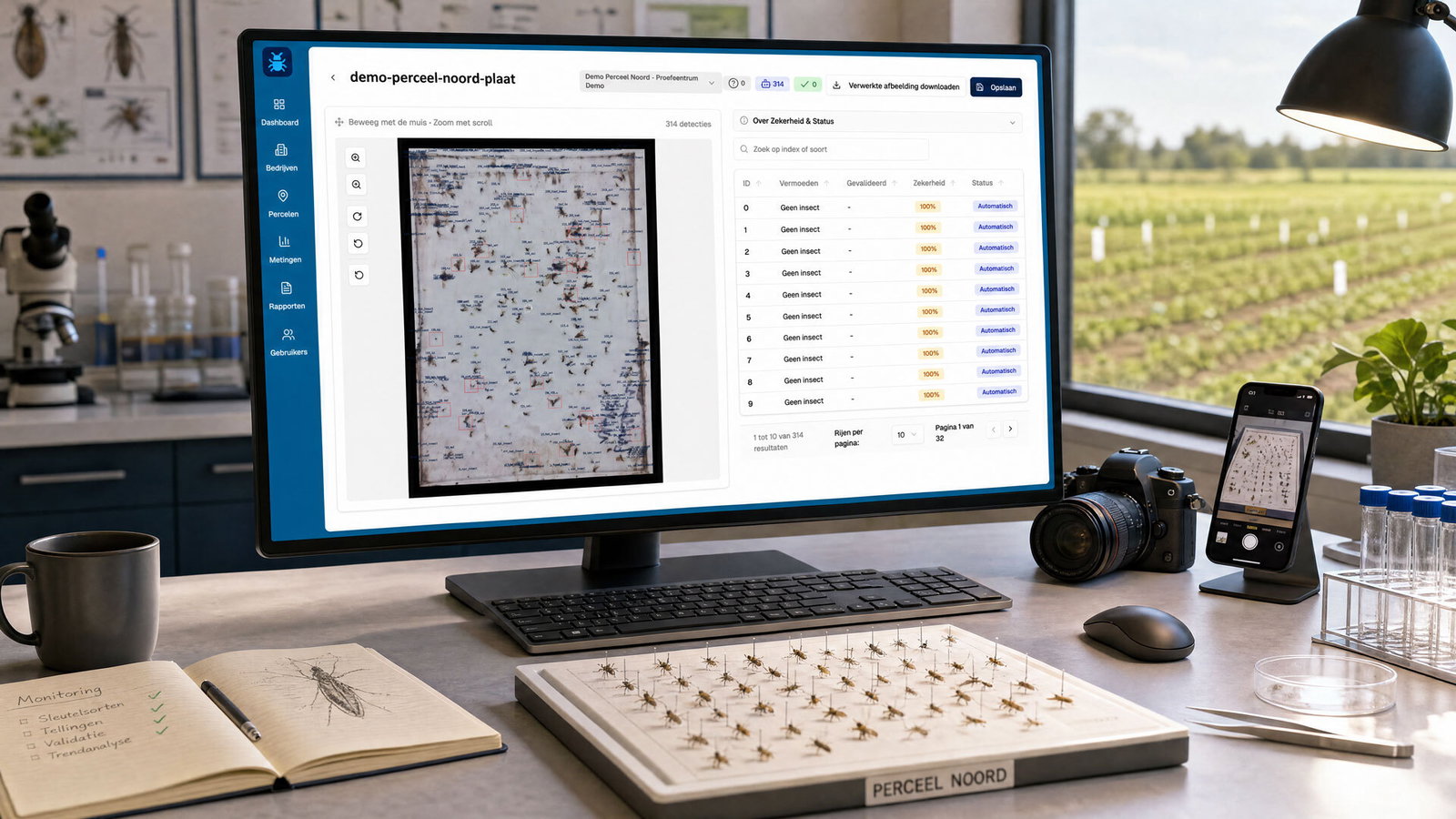
How KU Leuven took AI insect detection from the lab to the field

Growers and research centres process field photos, receive automatic alerts and export reports. KU Leuven can host the system itself.

Read the case
S.Tool

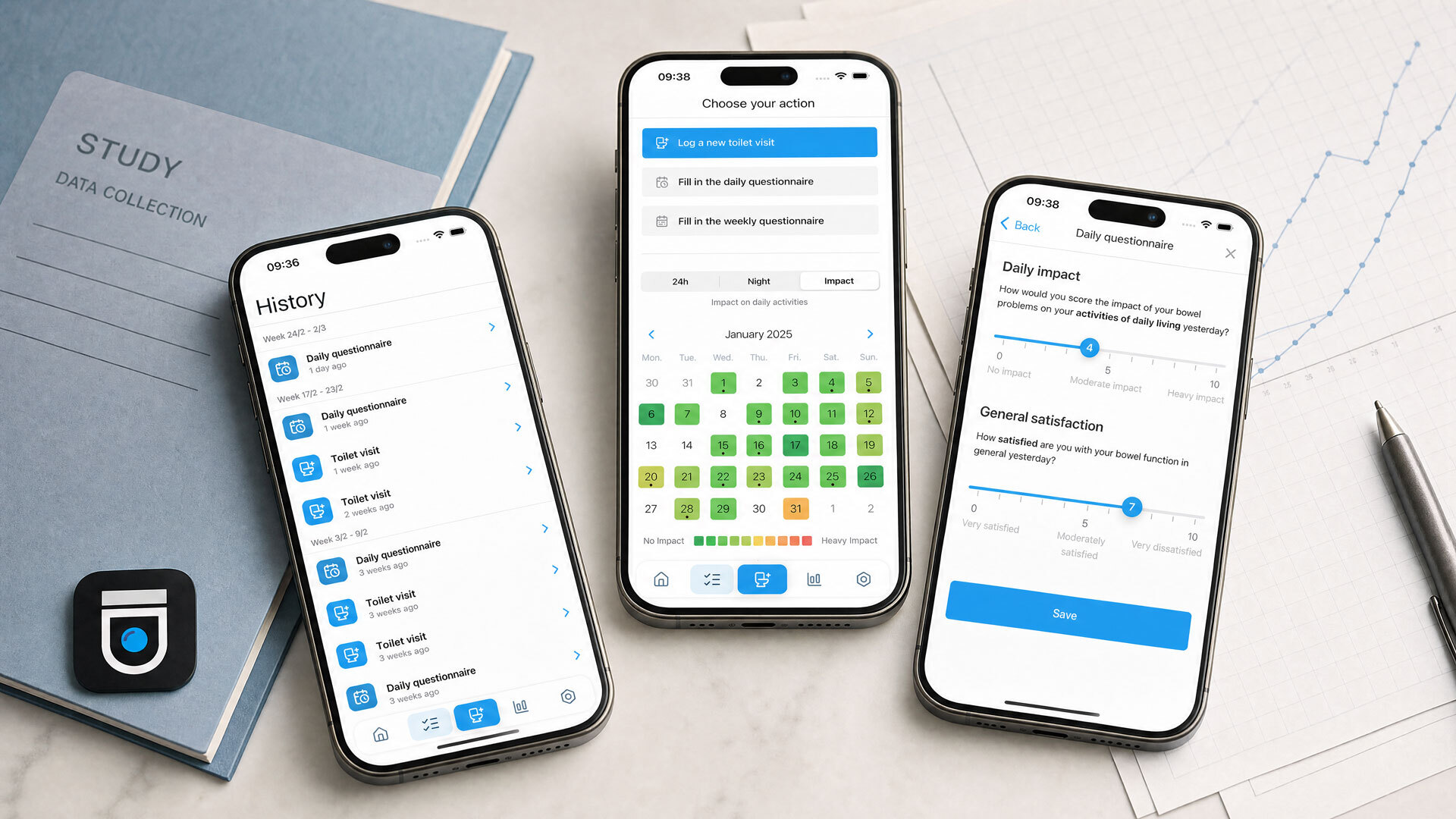
An app to help discuss bowel problems after cancer surgery

Patients complete the questionnaire in 30 seconds; researchers at KU Leuven and UZ Leuven receive longitudinal data.

Read the case
Fonar

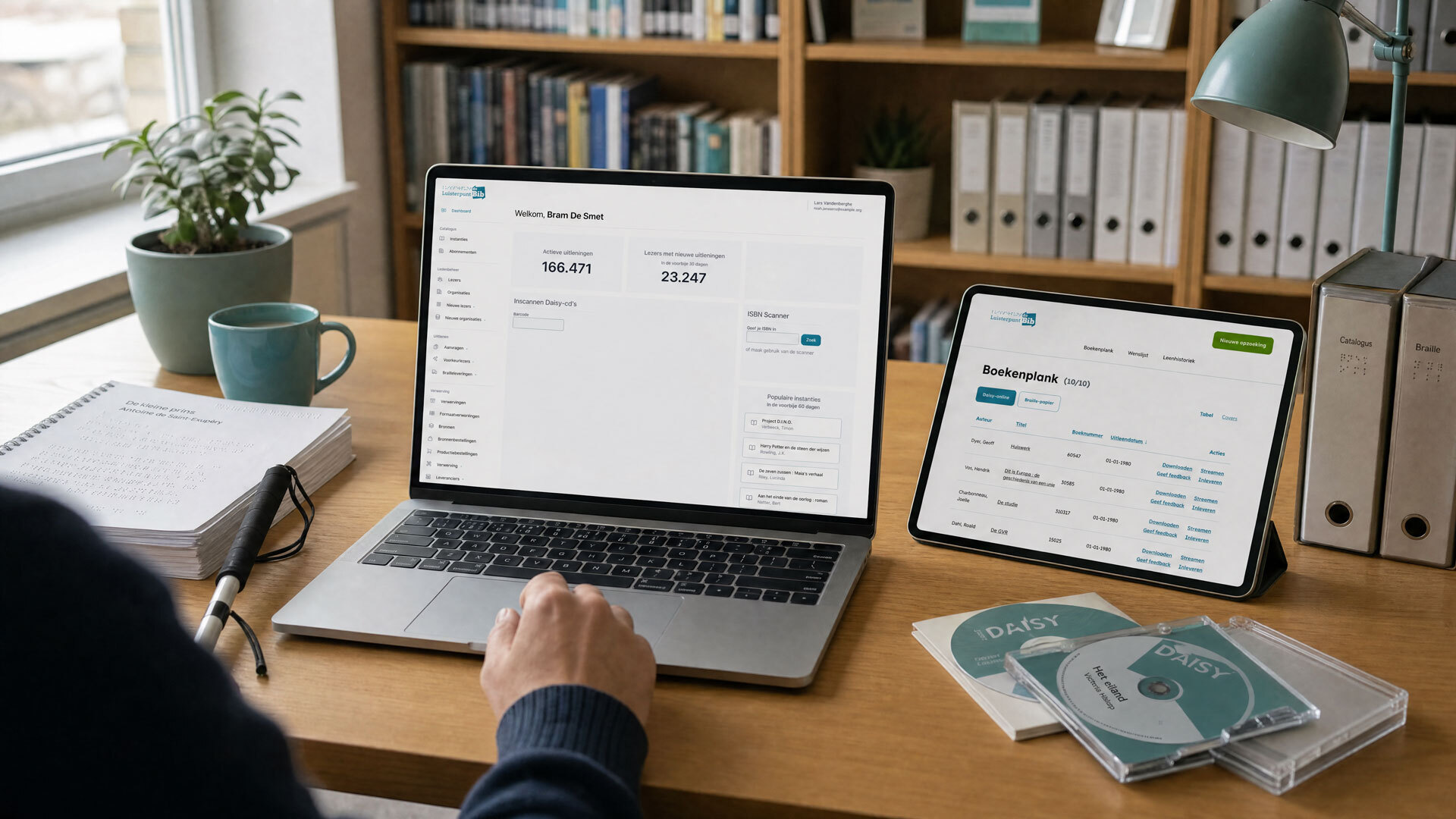
A modern library for 86,000 readers with print disabilities

From DOS codes and misused data fields to a platform that supports Luisterpunt's day-to-day operations.

Read the case

Need a digital product that goes beyond a website or app?

Tell us where your organisation wants to go and what's getting in the way today. We'll help you find a practical first step.

Let's talk

You'll speak directly with someone who can think through your project with you.

Not ready for a conversation yet? See what we've built