


Spark*
Support through difficult moments, in young people's hands
Client
Flemish Centre of Expertise in Suicide Prevention (VLESP) / Ghent University
Services
Co-creation, UX and visual design, mobile app development, CMS integration and technical support
Sector
Health and wellbeing
Audience
Young people and care professionals

The challenge
A free app that helps young people experiencing suicidal thoughts rediscover what supports them and find their way to help.
Suicidal thoughts do not keep to the hours of an appointment with a care professional. VLESP wanted to give young people something practical to turn to during difficult moments, too. As part of the Flemish Action Plan for Suicide Prevention, the centre of expertise worked with young people and care professionals on a free app that young people can use on their own or with someone they trust.
The content needed to be grounded in scientific evidence while feeling immediately useful. A Safety Plan helps you use a calmer moment to set out what you can do when things get difficult, who you can talk to and where to find help. There also needed to be room for hopeful memories, simple exercises and reliable information. The app had to bring these together without taking the place of professional care.
Zenjoy was asked to turn that content and scientific foundation into a mobile app that is quick to understand, even under stress. This became an intensive co-creation process with experts and an extensive research phase involving young people. Ethical review and protecting their privacy were essential throughout. From the first wireframing workshops, we paid close attention to making the Safety Plan visible and help directly accessible.
Help within easy reach
In the first wireframing workshops, we discussed how a young person would use the app at different moments. Not everyone starts by thinking, ‘I want to fill in a Safety Plan’. So we gave the home screen an entry point based on how someone is feeling at that moment. Their personal plan, exercises and routes to help remain visible and accessible.
The Safety Plan is a personal, step-by-step plan. Young people can choose from examples and add their own text or photos. Its seven steps provide guidance while keeping unfinished sections visible. The plan can also be shared as a PDF, for example to review it with a care professional.

Room for calm and hope
Alongside the plan, there is the HopeBox, where young people collect things that bring them calm or hope. The app also includes accessible exercises, information and helpline contact details. Spark* offers different ways to get through a difficult moment, depending on what works for each young person.

Taking care of personal content
A personal plan and a HopeBox contain sensitive data. The app stores these locally on the device. The content managed by VLESP, such as information, exercises and helplines, comes from Nimbu and is also available offline. This lets the information stay up to date while young people's own data remains on their devices.
VLESP brought together subject-matter and clinical expertise and involved young people and care professionals in the research. Zenjoy contributed mental wellbeing experience from earlier projects, including BackUp for Zelfmoordlijn 1813 and work for Stichting 113. We translated the insights into the structure, visual design, characters and development of the iOS and Android app.
Oetang designed conversation cards that complement Spark* and use the same visual language and characters. We worked with Ozmotion to animate the characters. This gave the app and the cards a consistent design while respecting the seriousness of the subject.
The result
Spark* is available free of charge on iOS and Android. Young people can create a personal Safety Plan, fill their HopeBox, use exercises and find a direct route to help. The app is also designed to be used with someone close to them or a care professional. It does not replace professional care.
According to Opgroeien, more than 70% of the young people who took part in the evaluation said that Spark* helps them know what they can do when they are thinking about suicide. That evaluation covers the app as a whole; it is not a separate assessment of the impact of Zenjoy's work.
What we delivered
- A personal Safety Plan in seven steps.
- A home screen that responds to how a young person is feeling.
- Support contacts within immediate reach.
- A HopeBox for personal things that bring hope or calm.
- Exercises for distraction, relaxation and coping with difficult moments.
- Reliable information and answers to questions.
- Content managed through Nimbu, also available when there is no connection.
- Personal data stored locally on the device.

More case studies
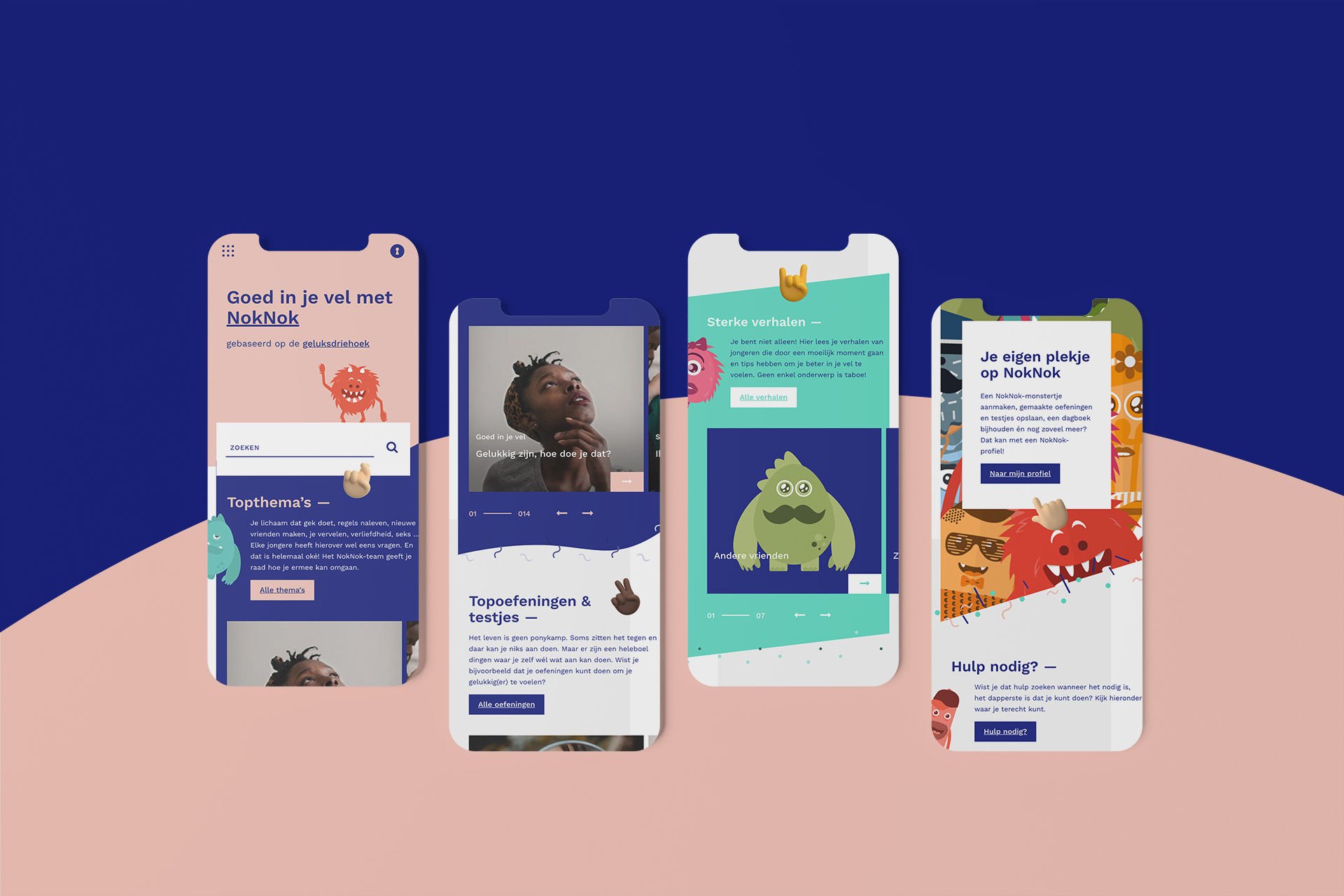
Noknok
An online tool by Gezond Leven that helps young people aged 12 to 16 build mental resilience, with exercises, a diary and personal goals.
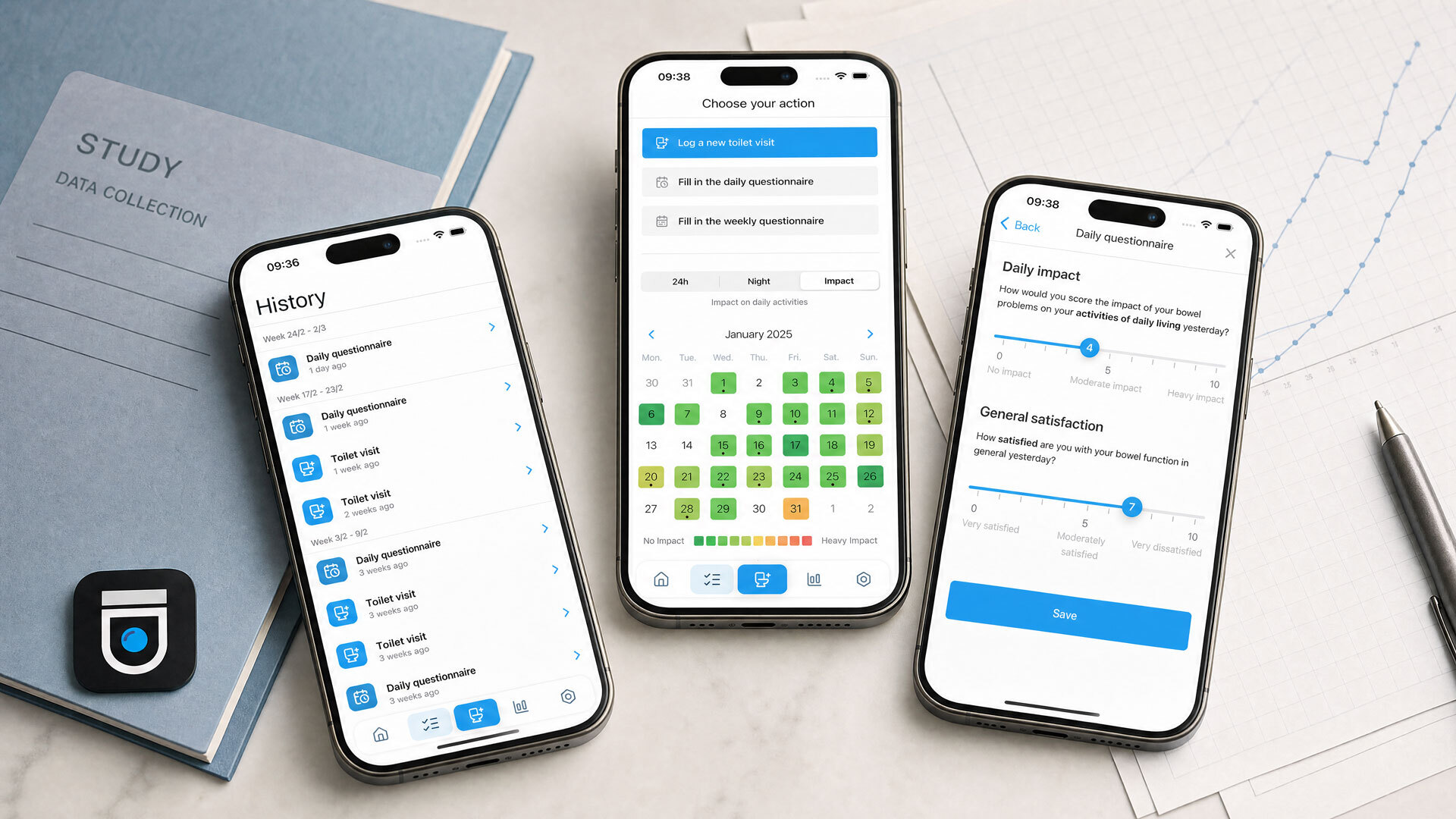
S.Tool
An app that lets patients track bowel complaints after cancer surgery and share them with their doctor, developed with a KU Leuven research group.
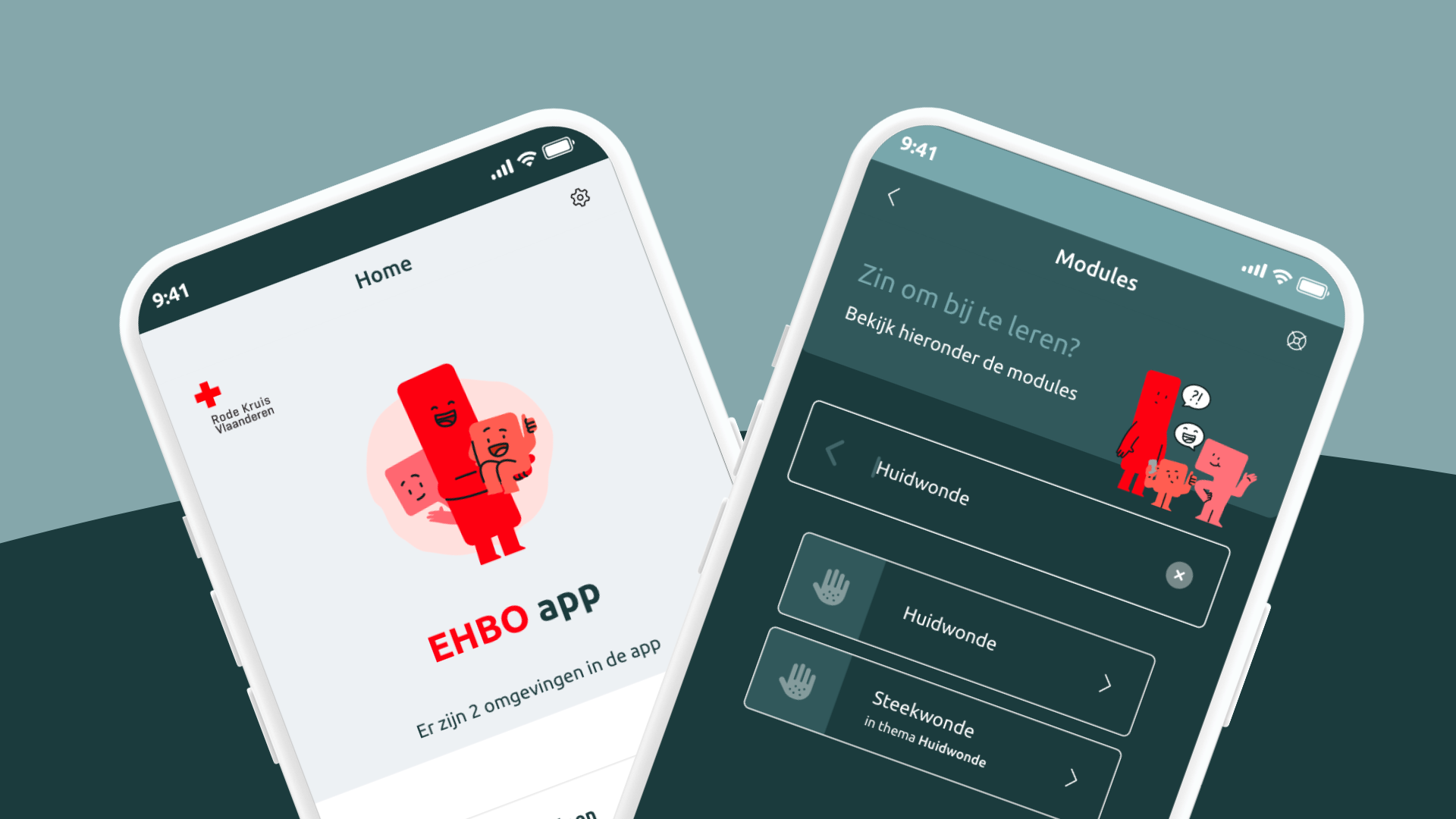
Rode Kruis Vlaanderen
UX and visual design for Rode Kruis Vlaanderen’s first aid apps, including support for mental health problems. Available on Android and iOS.
Building a wellbeing app with care?
We would love to help you shape a product that brings together content, usability and care.