


Alegria
From a simple website to a welcoming digital home for people with cancer
Client
Alegria vzw
Sector
wellbeing / non-profit / cancer support
Services
brand identity, web design, website development, registration platform, management area, donation module
Technology
Nimbu CMS, Liquid, Alpine.js, Nimbu Cloud Code, Mollie
Partnership
started in 2022 and expanded step by step since then
Status
live and in use
The challenge
A recognisable visual identity and a digital platform that helps Alegria manage its services, data and growing organisation.
Alegria is a meeting place in the Kempen region for people with cancer and their loved ones. Anyone who walks through the door finds a listening ear, information, activities and people who understand how cancer can affect a life. That openness needed to come across online too: someone who has never heard of Alegria should quickly understand what the organisation does and how it can support them.
The partnership began with a simple website, but the ambition went further: Alegria wanted to develop a more professional way of working as a non-profit organisation. Its visual identity needed to better reflect what it stands for. At the same time, the team wanted to manage its data and services more effectively, rely less on paper and build an operation that could grow with Alegria.
That is why we looked beyond the screen. Alegria also communicates through leaflets, posters and presentations. All of these needed to feel like a coherent whole, without losing the organisation’s warmth.
The website also needed to do more than provide information. Alegria organises activities and individual pampering sessions at several locations. Guests want to sign up easily. Volunteers and coordinators need to know who is coming, what is fully booked and who is on the waiting list. The work behind the website deserved just as much attention as the first impression it makes.
Our approach
A recognisable identity for a welcoming organisation
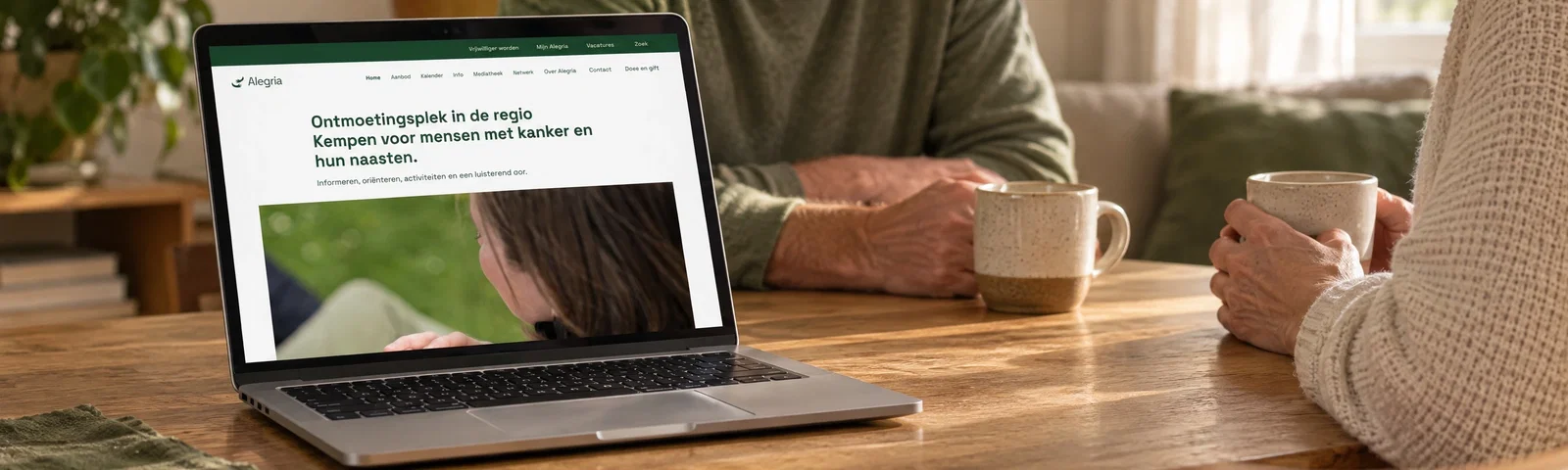
We developed the visual identity and applied it to the website and communication materials. The new site immediately makes clear who Alegria is for and what it offers. Stories, services, activities, locations and ways to help each have their own place, making it easy for guests and their loved ones, volunteers and donors to find their way.
That clarity matters when dealing with a sensitive subject. People looking for support do not want complicated navigation or impersonal language. The website lets the people and their encounters speak for themselves and makes getting in touch as easy as possible.
Registration that fits the way Alegria works
An activity for a group of participants has different requirements from an individual pampering session with time slots. We therefore gave registrations and bookings an approach suited to each. Visitors can browse what is available and sign up online. When a session is fully booked, a waiting list can help fill places that become available again.
The forms reflect how Alegria works in practice: locations, capacity, time slots and rules about who is eligible for which activities and services. Confirmations and reminders keep guests informed. Through Mijn Alegria, they can find their registrations and bookings and cancel if their plans change.
One important question concerned fair access. Bookings for pampering sessions with limited availability sometimes went to a small group of people. Together with Alegria, we translated the wish to give everyone a chance into rules within the system: certain pampering sessions have a monthly limit, while a waiting list helps reallocate places that become available. The website explains why someone cannot book straight away.


A clear overview for the people behind the scenes
We built a restricted area for coordinators and volunteers, tailored to their tasks. They can view registrations and bookings, follow up with participants and record attendance. Visitors who drop in without an appointment can also be registered. Overviews, filters and exports help with day-to-day organisation.
The platform also supports volunteer coordination, with space for profiles, internal activities, attendance and follow-up conversations. Records from the drop-in centres feed into anonymised statistics, giving Alegria a clearer picture of how its services are used. Access depends on the user’s role and location, so people see the information they need for their work.
The website grew into a practical tool for the team. It brings together information that could otherwise easily become scattered across inboxes, separate lists and individual arrangements.

Making it easy to give support
Alegria relies on people’s commitment and donations. We therefore also built a donation module. Visitors can make a one-off donation online or request to give monthly. The form collects the details Alegria needs for administration and, where applicable, tax certificates. The team can see donations and their status in the management area.
Making a donation should feel like the rest of the site: clear, considered and true to Alegria’s tone. For an organisation whose activities depend on the support of others, that step matters.
Continuing to improve together
The collaboration stayed close to everyday practice. From the first conversations, we discussed more than photos and pages: who should be able to see registrations, who can cancel someone’s registration and how does that work across different locations? Alegria brought ideas and experience from its drop-in centres to the table. We helped clarify the practical needs behind them and turn those needs into workable features.
This is reflected in the online donation module, but also in the need for useful statistics and the rules around bookings. Each broad idea became a conversation about what guests, volunteers and coordinators actually needed. This shaped both the website and the services behind it.
New needs continued to emerge after launch: managing waiting lists, handling cancellations, registering visitors and supporting volunteers more effectively. We incorporated these into the platform step by step. This way of working together gave us room to contribute ideas and let the solution grow with Alegria.
The result
Today, Alegria has a recognisable visual identity, a public website and a digital platform that supports much of its day-to-day work. Registrations, follow-up and donations can be managed online, making the organisation less dependent on paper-based processes and better able to grow alongside its services.
- Visitors can find information about Alegria, its services, its locations and ways to help.
- Guests sign up for activities online or book a time slot for a pampering session, with waiting lists where needed.
- Mijn Alegria gives guests an overview of their registrations and bookings.
- Coordinators and volunteers keep track of participants, visitors, activities and attendance through restricted overviews.
- Volunteer coordination is supported through profiles, internal activities and follow-up conversations.
- The team can view anonymised statistics and export data to help organise its work.
- Donors can support Alegria with a one-off or monthly donation, and the team can track donations.
Alegria notices the difference in its day-to-day work. A more practical overview of registrations and bookings reduces the coordinator’s workload. Guests receive reminders about their activities. The organisation is also receiving more donations. The social value lies in what these connected services make possible. People looking for support find a welcoming way in. People organising activities have a clearer overview. And the team can devote more attention to the encounters that make Alegria special.
More projects
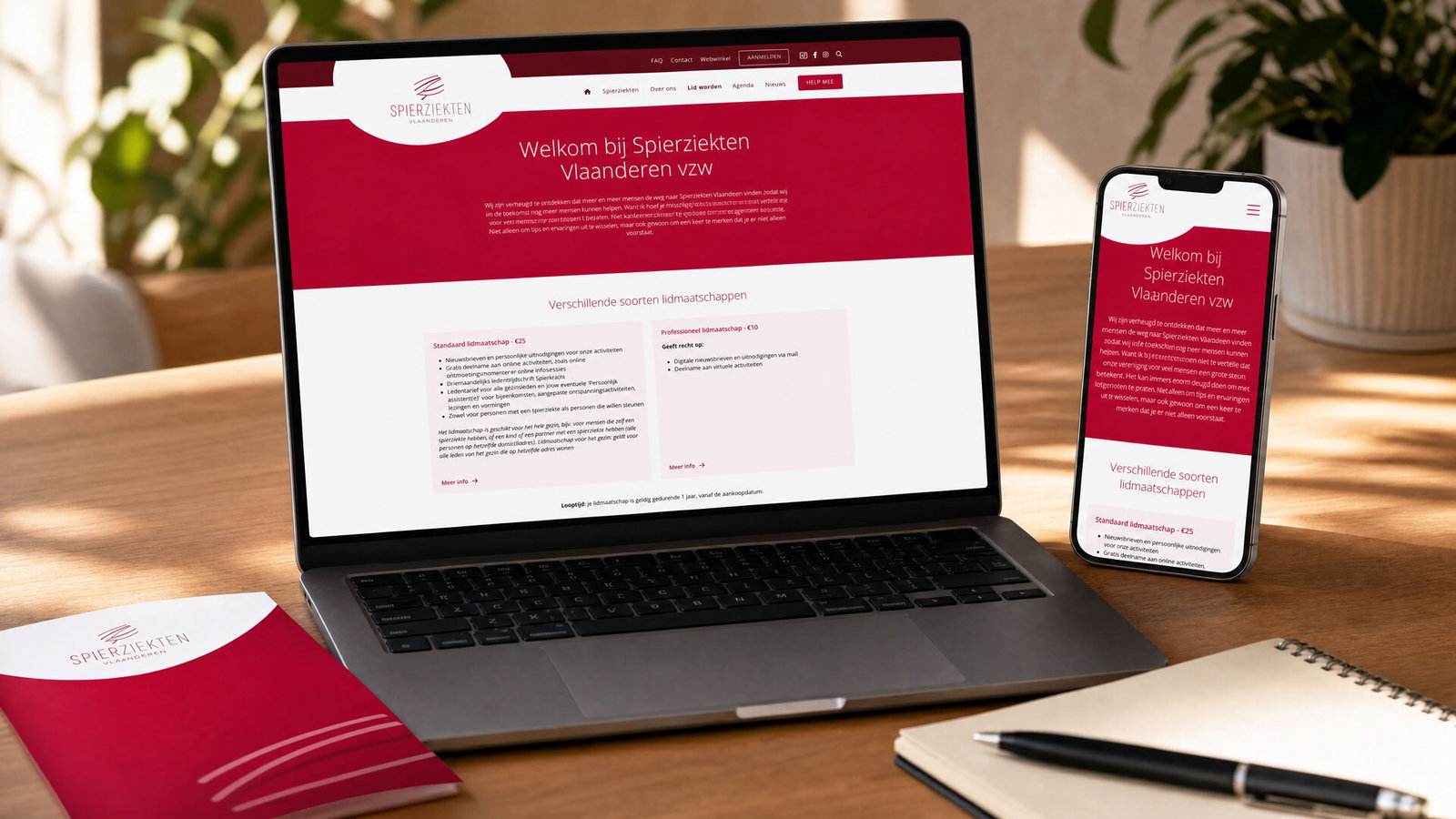
Spierziekten Vlaanderen
A website and member platform where families find information, manage their membership, sign up for activities and pay online.
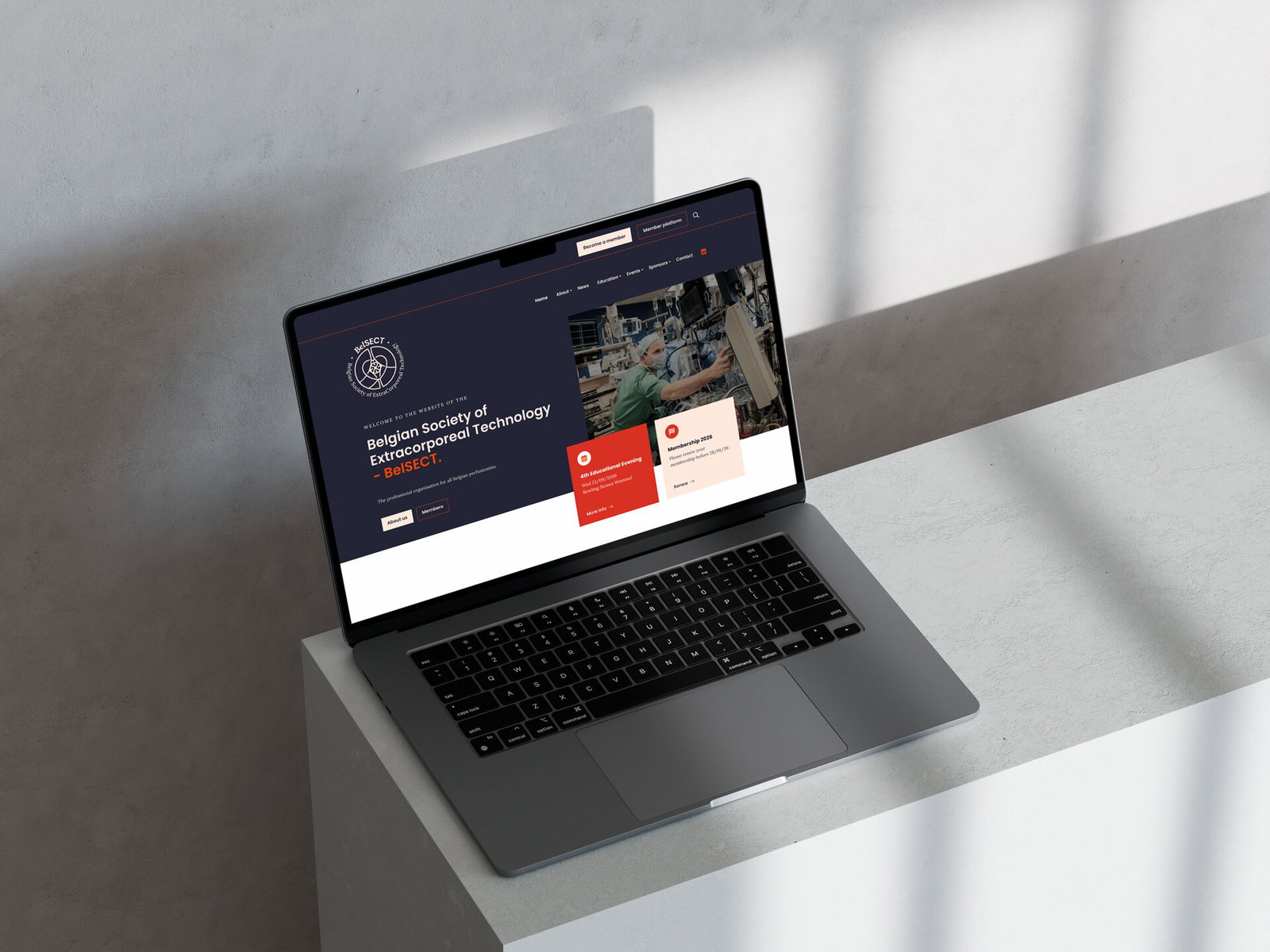
BelSECT
One digital home built to last. Volunteers keep a better overview, sponsors manage their own details and members register easily for events and symposia.
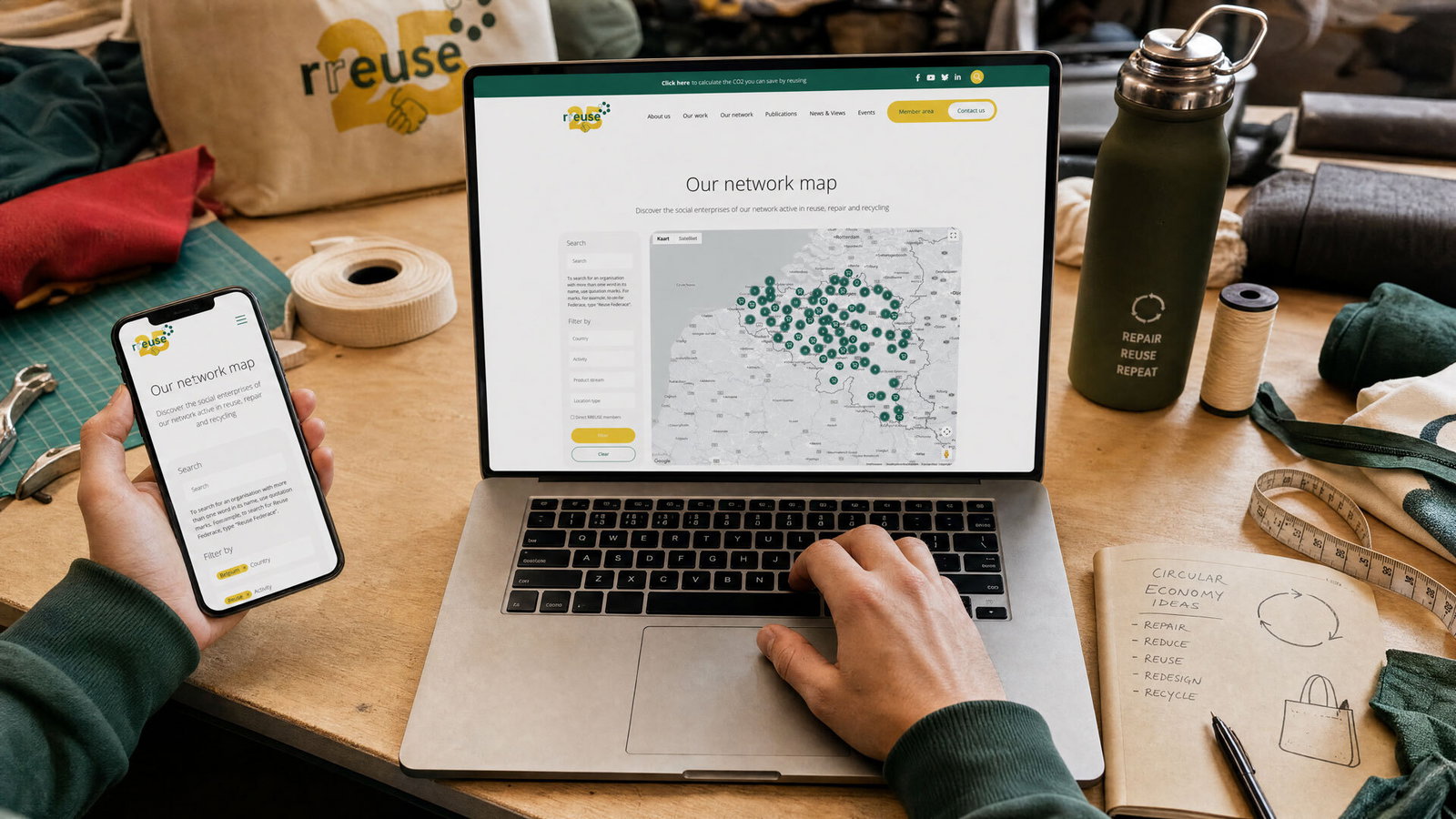
RREUSE
A website, searchable map and members area that let RREUSE manage nearly 3,000 locations from some thirty partner networks across Europe.