One codebase
A single mobile codebase in React Native and Expo for iOS and Android.


From a website to a fast mobile app with reliable health information
Client
Cebam, for the Gezondheid en Wetenschap project
Services
Mobile app (iOS and Android), UX/UI design, technical rebuild, content synchronisation, release support and maintenance
Sector
Health information / healthcare communication
Duration
March 2025 to 2026, with ongoing follow-up
Gezondheid en Wetenschap helps people assess health information. For years, the Cebam editorial team has been writing and updating evidence-based information on illness and health, and fact-checking media reports. Zenjoy also builds and maintains the website that brings that content to a wide audience.
Cebam already had an app for Gezondheid en Wetenschap, but it did not do the content justice. The user interface was not good enough, guidelines did not load reliably and the technical foundation was not scalable. The content was reliable. Its digital translation needed a fresh look.
That is a difficult combination for a product that has to surface up-to-date information all the time. An app that leads people to reliable information must not become a source of doubt itself. When a guideline fails to load or a search returns nothing, the user loses more than an answer. They lose trust.
The brief for Zenjoy: rebuild Zoek Gezond as a clear mobile app for a wide audience, with the same content as the website, a search function that answers instantly and a codebase that Cebam and Zenjoy can build on for years.
The name Zoek Gezond puts searching for health information at the heart of the app. Someone has a question about a symptom, a treatment or a news story, and wants to find clear, reliable information quickly.
So search is literally at the centre: the search button sits in the middle of the tab bar and the home screen opens with a search field. Around it, navigation is limited to what people need in this context: an alphabetical list of all topics, the In the spotlight section and the fact checks. Recent and featured topics appear on the home screen, so the app has something to offer even to those without a specific question.
Those choices look simple, and that is the point. The app does not need to explain how Gezondheid en Wetenschap is organised. It needs to help people get something out of it.

The app pulls all its content from Nimbu, the content platform behind the Gezondheid en Wetenschap website. Topics, fact checks and featured items stay connected to the editorial workflow that already exists. The editors publish once, and website and app follow. There is no second content environment to maintain.
The full topic database holds around 960 guidelines, some 25 MB of text in total. We store that entire dataset on the device. On opening, the app immediately shows the local copy. It then checks with Nimbu whether anything has changed, and only then downloads a new version. Reading and searching stay fast, even without a perfect connection.
A dataset that size needs care on devices with little memory. So the app streams the data to a file, reads it in small chunks and only replaces the previous version after validation. The server delivers the file compressed, under 4 MB over the network. That keeps the app light and stable, even on older Android devices.
Search runs entirely on the device, using a Fuse.js index over titles and tags. A match on the title weighs more than a match on a tag. Accents are ignored and small typos are tolerated. With several search terms, topics containing all the words come first, followed by topics containing any of them.
Recent searches are kept locally, so a user can quickly return to an earlier query. These are small choices, but together they decide whether search feels like a tool or like one more hurdle.

The app builds on the familiar look of Gezondheid en Wetenschap without copying the website. Long guidelines get a table of contents with anchor links and a progress bar. Related topics sit at the bottom, and links to other topics open the right detail page inside the app. Fact checks follow the editors' fixed structure: the news, its source, how to interpret it, the conclusion and the references.
Health information has to work for a wide range of people, including those with poor eyesight or who use a screen reader. We chose Lexend as the reading typeface, a font designed for readability. The app automatically follows the device's light or dark mode. Every button, tab, search field and list item received a label and a hint for screen readers, and we tested what happens when users increase their text size.

The rebuild was not a one-off delivery. After the first iOS test versions in June 2025 came rounds of feedback from Cebam, refinements to search, navigation and accessibility, and publication on both stores. Fastlane automates the builds and the rollout to the App Store and Google Play, so a new version takes no manual work. Error reporting surfaces problems on users' devices before they show up in reviews.
Years of working together made the difference. We did not have to relearn how Cebam looks at health information. Cebam did not have to explain again why nuance, sources and timeliness matter. That left room for what mattered most in this phase: a reliable mobile experience and a technical foundation that stays out of the way.
Zoek Gezond is available on Android and iOS. The app brings the content of Gezondheid en Wetenschap to a place people always carry with them.
A single mobile codebase in React Native and Expo for iOS and Android.
Around 960 topics, fact checks and featured items from the same Nimbu environment as the website, with no extra editorial work.
All topics are stored on the device, so the app opens instantly and stays readable without a connection.
The app only downloads what has changed, compressed over the network and light on memory on older devices.
Search on title and tags, tolerant of accents and typos, with a history of recent searches.
Topic pages with a table of contents, progress bar, related topics and internal links that stay inside the app.
Fact checks in the editors' fixed structure: news, source, interpretation, conclusion and references.
Light and dark mode, scalable text and labels for screen readers.
Error reporting and automated releases, so problems surface quickly and fixes reach users fast.
"Thanks to years of collaboration, close involvement and technical expertise, Zenjoy managed to take over the mobile application and lift it to a higher level, both in ease of use and in look and feel. They also think ahead proactively about maintenance and improvements."
Marleen Finoulst, editor-in-chief, Gezondheid en Wetenschap
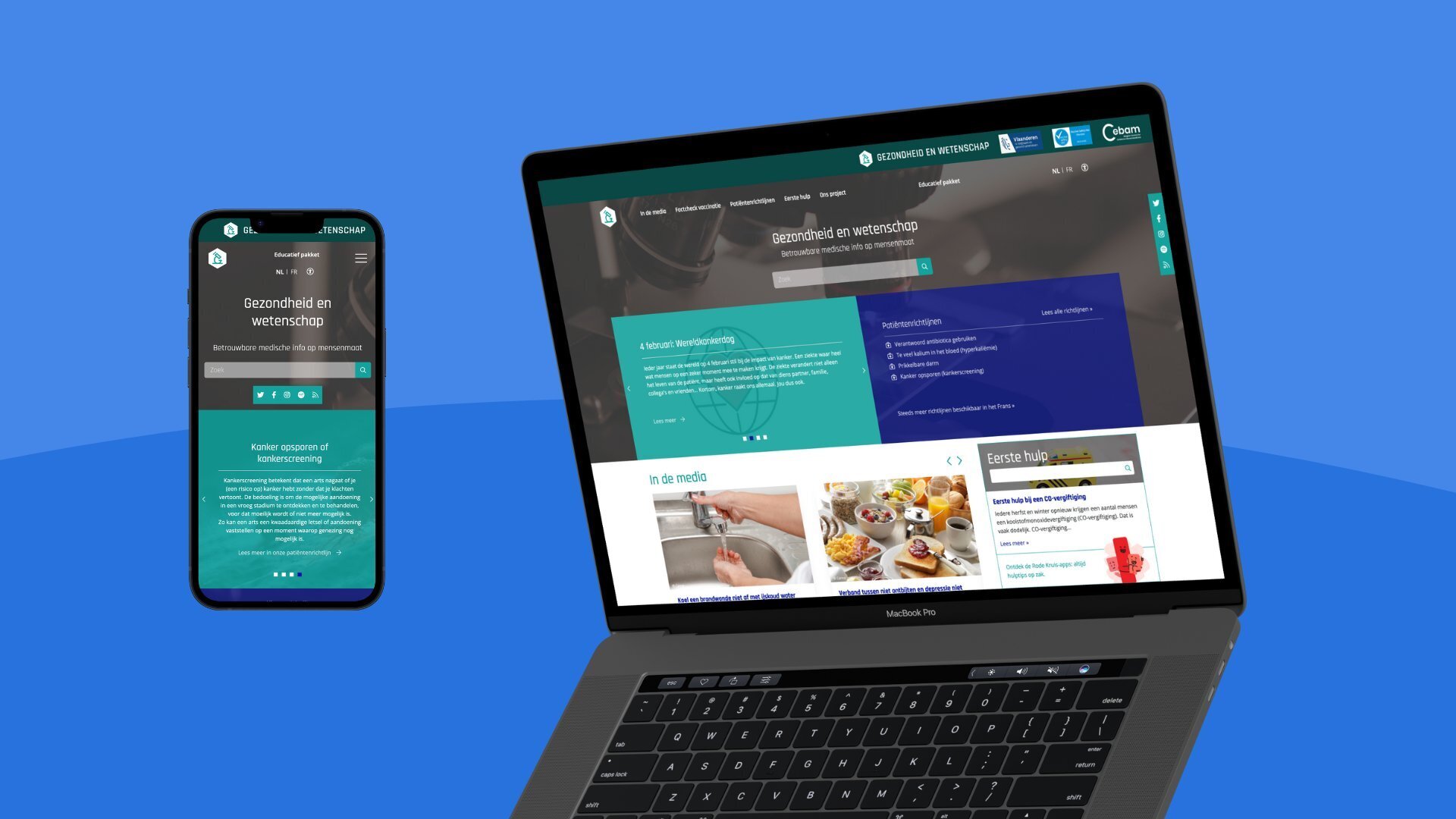
Commissioned by the Flemish Community, Cebam developed a website that turns scientific knowledge about health into clear, accessible information for a wide audience.
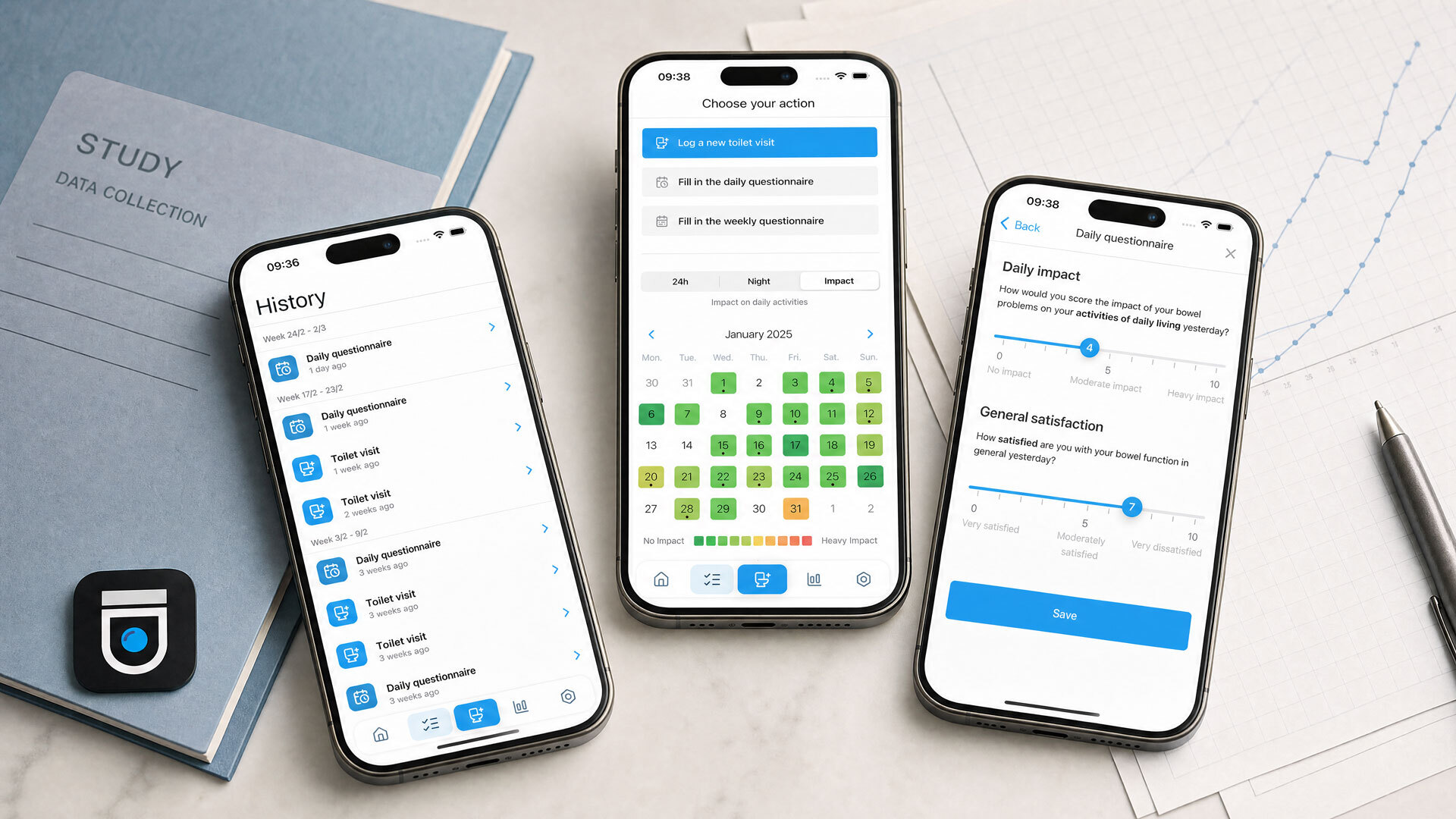
An app that lets patients track their symptoms and share them with their doctor, developed with the research team behind the questionnaire.
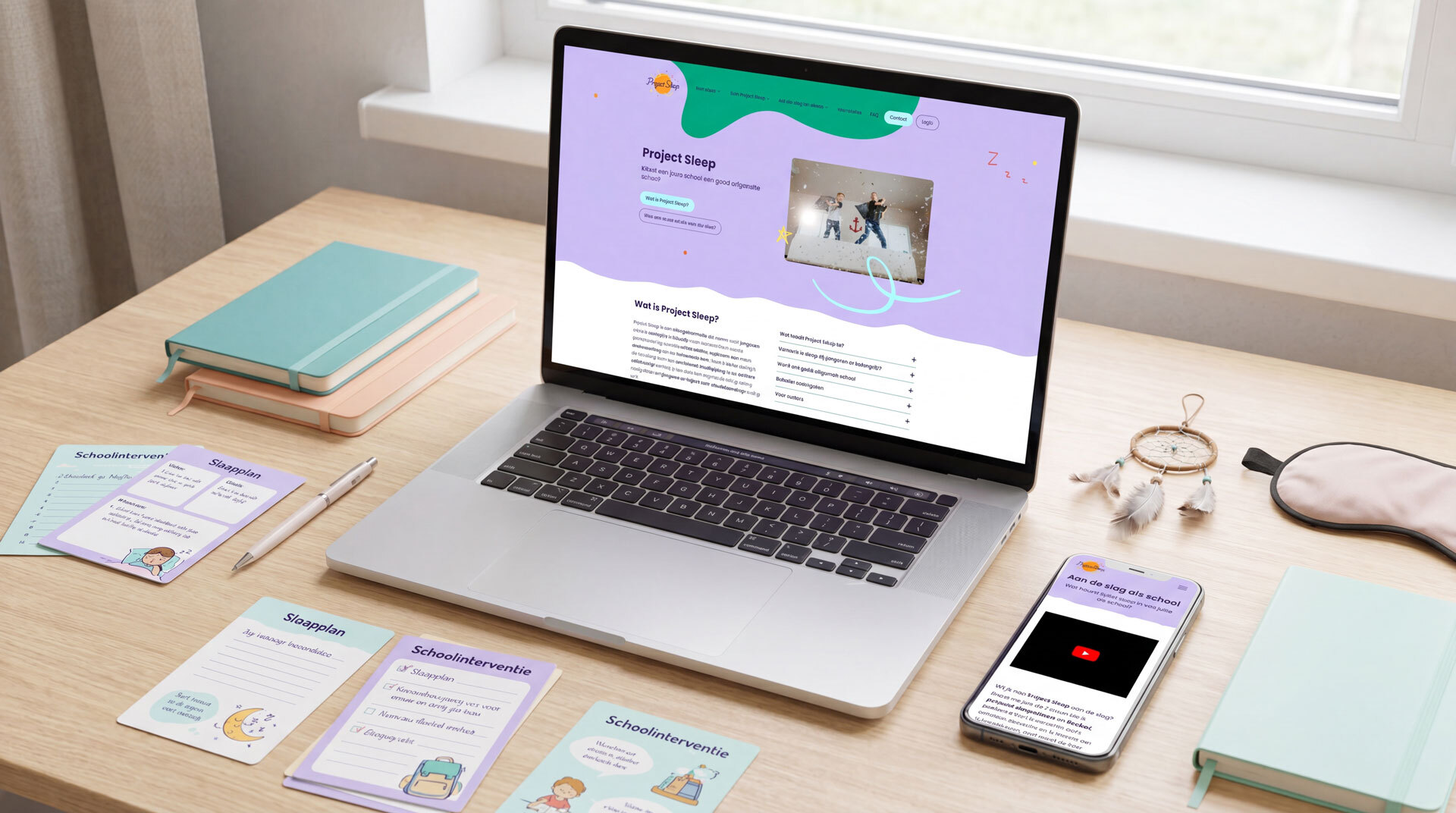
A public information platform and a secure school programme with onboarding, roles, phases and materials. Designed with three schools and scientifically evaluated.
We would be happy to help. Tell us what your organisation wants to achieve and what is getting in the way.
You will speak directly with someone who understands your project.